When biblical promises are invoked in the debate over Israel and Palestine, the interpretation of an ancient text becomes part of present-day discussions about land, borders, and belonging. This is also why I return to questioning the expression “chosen people”.
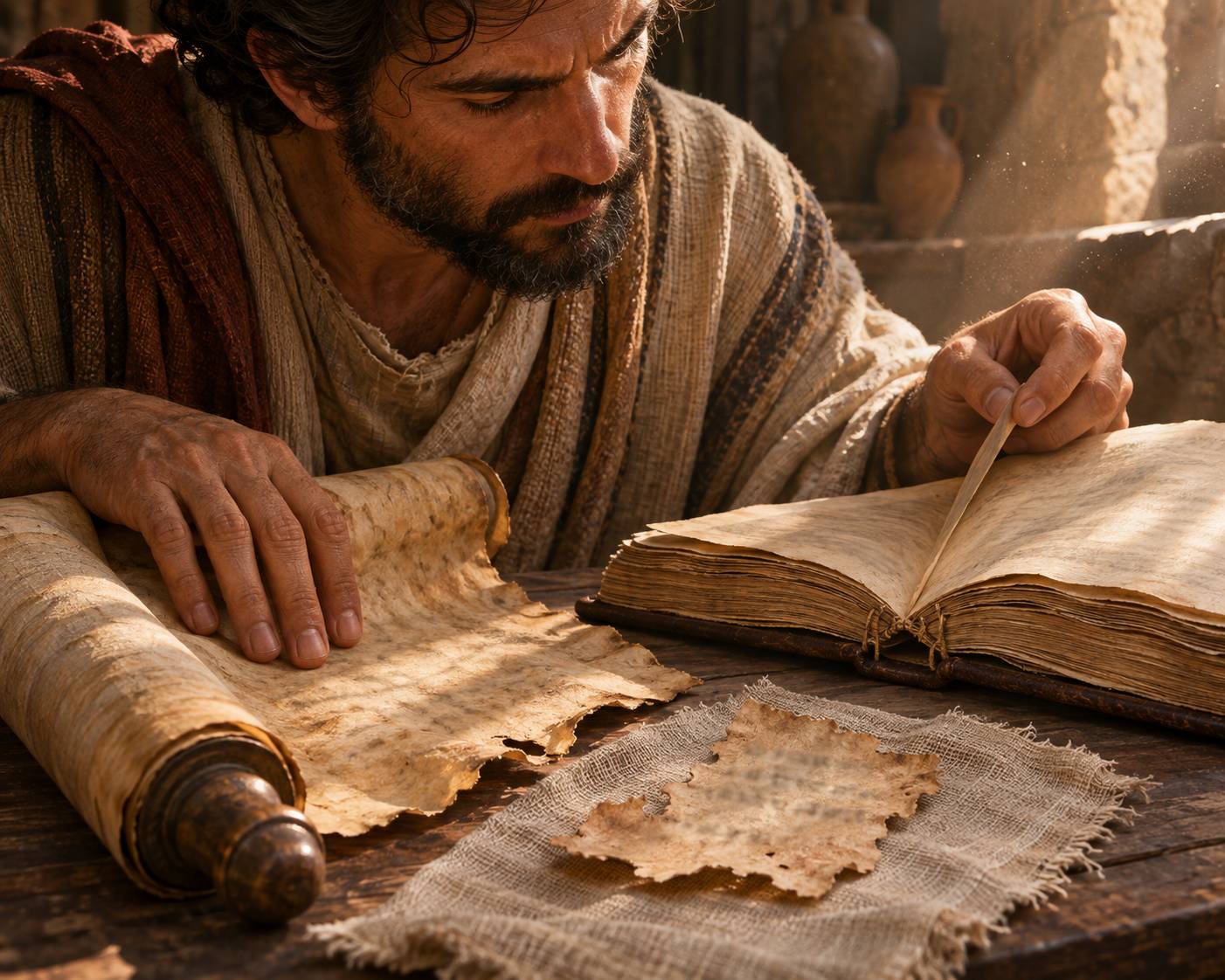
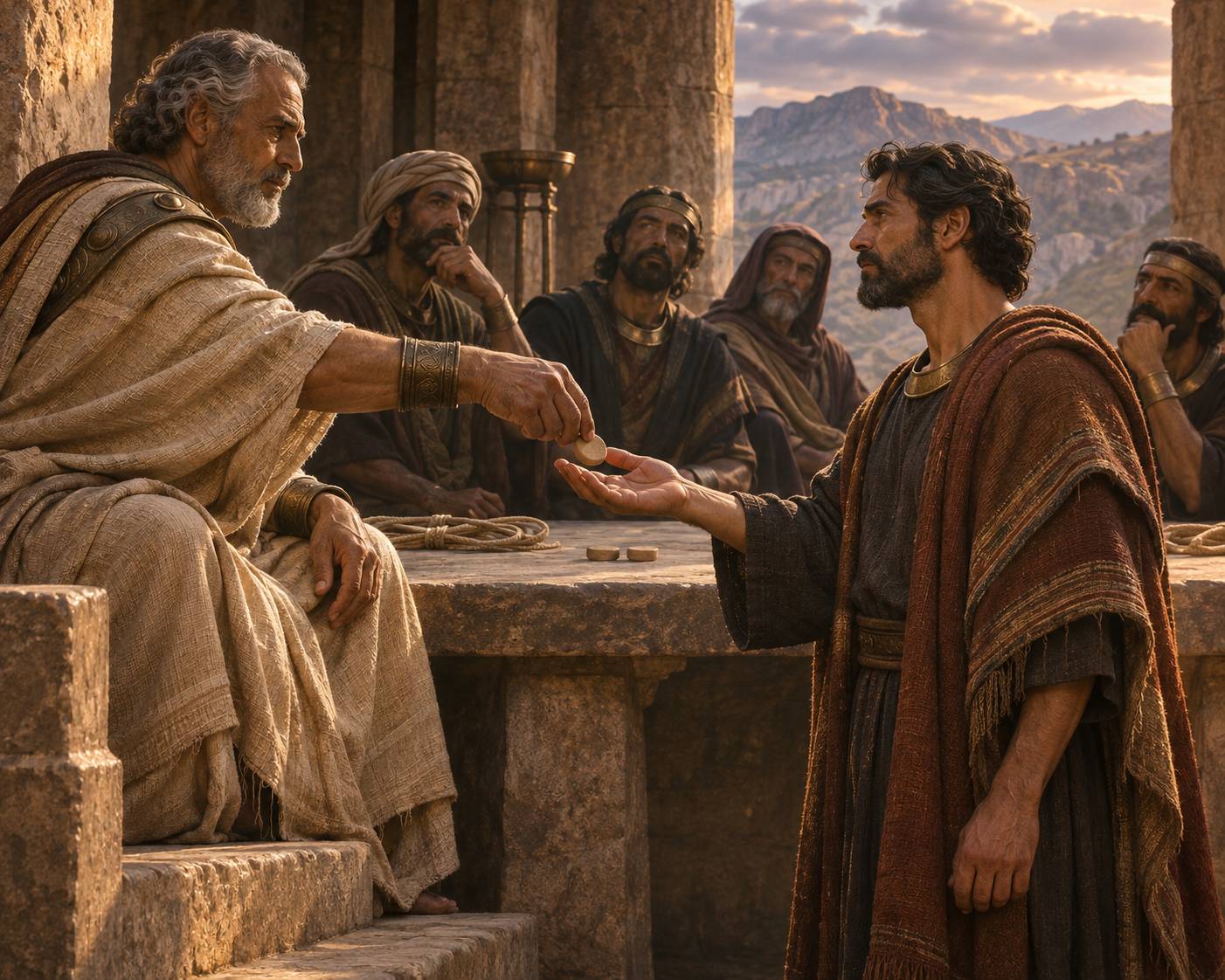
The word “chosen” presupposes someone who chooses, and I want to understand to whom the biblical authors attribute that choice and how they recount it. In addressing this question, however, we often bring with us everything we have learned to think when we hear the word “God” spoken. Opening the Hebrew text, we encounter names, titles, actions, and relationships that deserve to be examined one by one. This is the work I pursue in Gods of the Bible, applying my usual “let’s pretend” approach, following the scene described by the authors and observing who does what. One passage I focus on is Deuteronomy 32:8–9, within the Song of Moses. In the first verse, Elyon intervenes in the division of the peoples and establishes their boundaries. In the second verse, Jacob is presented as Yahweh’s portion, the lot of his inheritance. It is from this juxtaposition that my interpretation of a division among the Elohim takes shape, in which Elyon arranges the allocation and Yahweh receives his share. To understand how we arrive at this conclusion, let us return to the text and compare the different forms in which the manuscripts have transmitted the account to us. The song first invites us to recall ancient times, to ask our fathers and elders about the memory of previous generations. Against this backdrop, verse 8 recounts the separation of peoples and the establishment of their boundaries. Elyon orchestrates a division, but the criterion by which those boundaries are set changes depending on the text we read. In the Masoretic Text, the Hebrew tradition underlying many modern translations, the verse ends with the words “according to the number of the children of Israel.” The Hebrew expression is בְּנֵי יִשְׂרָאֵל, benè Yisrael. The reader thus encounters a connection between the order of the nations and the number of Israel’s descendants. This is the wording found, for example, in the CEI 2008 Bible. However, if we compare this tradition with the Qumran fragment identified as 4Q37, or 4QDeutʲ, we read בני אלוהים, benè Elohim, an expression commonly translated as “sons of God.” I am also leaving the term Elohim visible here so that everyone can follow the reasoning starting from the Hebrew word. In the fragment, the correspondence between the number and the boundaries is linked to the “sons of Elohim.” The comparison thus takes place within the Hebrew text itself, even before we reach our translations.
בְּנֵי יִשְׂרָאֵל — benè Yisrael בני אלוהים — benè Elohim
The Septuagint, the ancient Greek version of the Hebrew Scriptures, also preserves significant evidence. The most widespread reading contains ἀγγέλων θεοῦ, “angels of God,” while some Greek manuscripts read υἱῶν θεοῦ, “sons of God.” The more common Greek formulation thus characterizes these beings as angels, while the other preserves the image of “sons.” Even within the Greek tradition, we find different ways of transmitting this passage.
ἀγγέλων θεοῦ υἱῶν θεοῦ
With these words in mind, we can understand why the choice of text affects the interpretation. In the Masoretic form, the number refers to Israel. In the Qumran reading, and in the Greek formulations just considered, the division of the peoples is linked to divine beings. The convergence between the Hebrew fragment and the Greek tradition is one of the arguments that lead many scholars to consider a reading of this second type to be older. Those who wish to verify this comparison in Italian as well can consult the Interdenominational Bible. Here, the verse is rendered in a way that explicitly states the assignment of a guardian deity to each people, and the footnote refers to Qumran and the ancient versions. The translation thus guides the reader into one of the possible reconstructions of the scene. Knowing which words serve as the starting point allows for a more in-depth evaluation. At this point, I return to the central figure of this division. The term עֶלְיוֹן, Elyon, is usually translated as “Most High.” In Hebrew, however, it is not an absolute superlative; it simply expresses being high, superior, or placed above. To understand its usage, we can remain within Deuteronomy itself. In chapter 26, verse 19, it refers to Israel, which will be placed above other nations in renown, name, and glory. The context thus tells us to whom that superiority applies and in what sense. When I use the expression “the one who stands above” in this book, I wish to draw attention to the position this figure occupies in the narrative. In Deuteronomy 32:8, Elyon is the subject who intervenes in the ordering of the nations. In the following verse, Yahweh is named, and the canticle specifies what his portion is. To understand the relationship between the two designations, I follow the transition from the general division to the individual portion. Verse 9, translated while retaining the Hebrew name, reads: “For Yahweh’s portion is his people, Jacob the lot of his inheritance.” The two halves of the verse correspond to one another. “His people” is specified by the name “Jacob,” which here collectively refers to his descendants, Israel. It is the human group to which the narrative applies the language of “portion,” “lot,” and “inheritance.” One of these words is worth pausing to consider. חֶבֶל, ḥevel, can refer to a rope and, by extension, to a portion of land measured with a rope. We can visualize the concrete action from which this usage arises: that of demarcating a space and identifying which portion belongs to whom. In the verse, the word is applied to Jacob. The song thus employs a term that also belongs to the vocabulary of land division to describe a people’s belonging.
חֶבֶל — ḥevel
“Inheritance” also brings us back to the previous verse. The Hebrew noun naḥalà belongs to the same root, נחל, as the verb that opens verse 8. Yahweh’s assignment and his portion are also linked through the lexicon. This is the vocabulary I examine in the chapter Private Property of Gods of the Bible, to explore the relationship between Yahweh and the group that belongs to him. In the interpretation I propose, these elements constitute a division among the Elohim. Elyon occupies the position of the superior who directs the allocation, while Yahweh is among the recipients. His portion is the family of Jacob. The transition from the nations to that group describes, in this framework, a distribution of responsibilities. Yahweh’s history with Israel begins with the assignment of that portion.
כִּי חֵלֶק יְהוָה עַמּוֹ יַעֲקֹב חֶבֶל נַחֲלָתוֹ
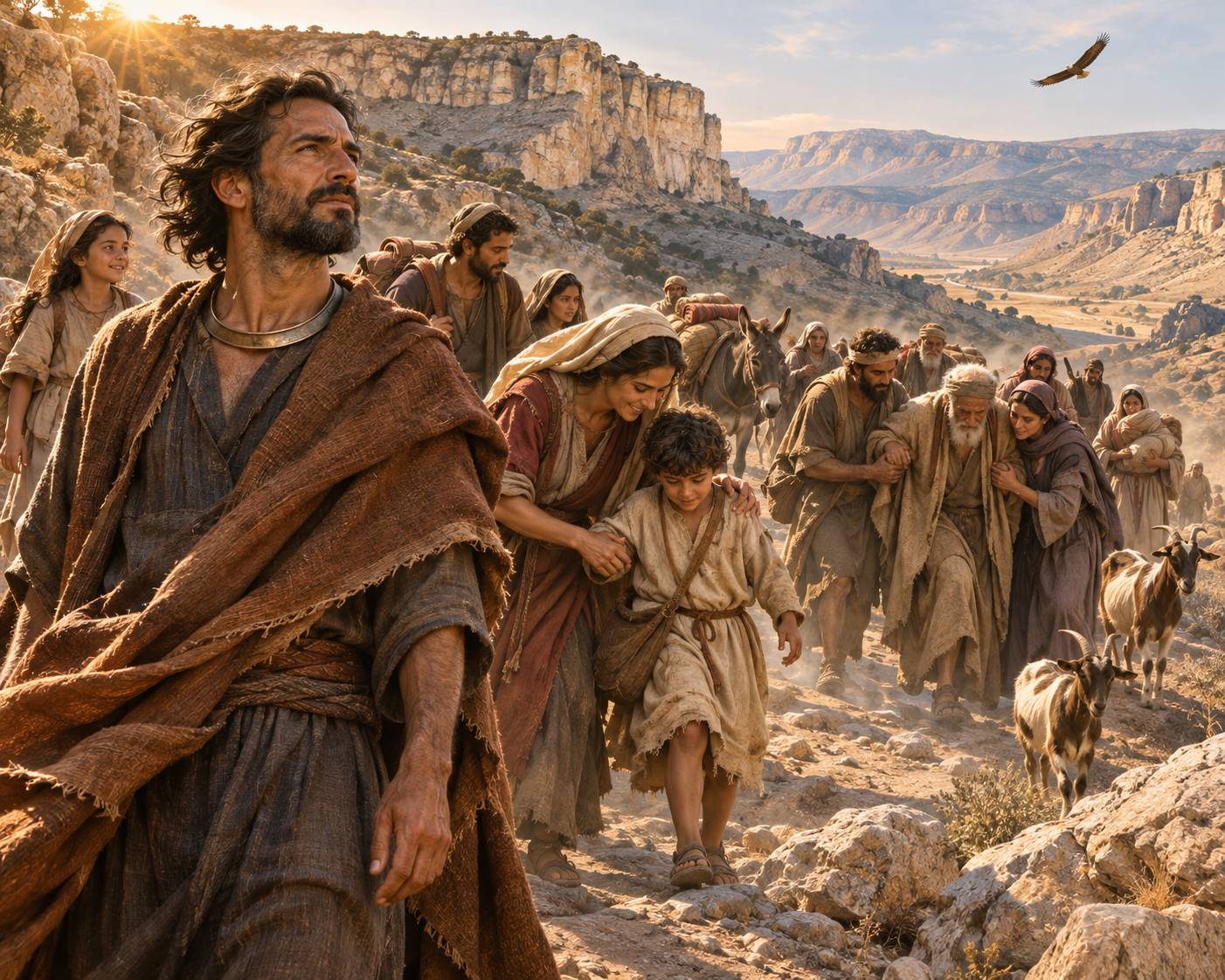
It is useful to observe how this reconstruction relates to the words of the verse. In Hebrew, verse 9 consists of two noun phrases, in which the verb “to be” is implied. The words establish to whom Jacob belongs. The act by which Elyon assigns that group to Yahweh is what I infer from the connection with the preceding verse. “Receiving a portion” is therefore how I describe the scene I reconstruct by reading the two passages together. There is also a different interpretation, according to which “the Most High” is here a title of Yahweh. From this perspective, it is Yahweh himself who distributes the nations and reserves Israel for himself. Those who support this view may point to Deuteronomy 4:19–20, where it is Yahweh who assigns the stars to the peoples and takes Israel as his own inheritance. The reference to the “sons of Elohim” and the identification of Elyon are thus two related issues, each with its own points for discussion. It is very likely that this variant was introduced during a monotheistic reworking of the Bible, aimed at presenting Yahweh as the one and only God, while the narratives retained—according to the interpretation I propose—traces of a polytheistic context in which he was one of many Elohim. To see how the song develops that relationship, I’ll continue to the following verses. In verse 10, Jacob is found in a desolate land, in a wilderness of howling winds. The narrative then describes the care with which he is surrounded, instructed, and protected. In verse 11, the image of the eagle watching over the young and carrying them on its wings appears: a situation that does not occur in nature, which leads me to wonder: where did Moses draw this example from, which describes Yahweh carrying his people on his wings? I leave the answer open. I conclude this paragraph by emphasizing that the people, who were called an “inheritance” just moments before, are now portrayed as dependent on the guide who takes charge of them.
Finally, verse 12 specifies, “Yahweh alone guided him, and there was no foreign El with him.” I am interested in the way the text defines this relationship. Jacob’s guidance is attributed exclusively to Yahweh. The expression “foreign god” evokes the world of affiliations, in which a distinction is made between those who have a relationship with that people and those who are strangers to it. In the interpretation I am following, this clarification aligns with the distribution of responsibilities described in the preceding verses. At this point, the expression “chosen people” also deserves to be reexamined. If a human group is called an “inheritance,” what does it mean for them to belong to someone? This question serves as the starting point for an analysis of the bonds, demands, and obligations that, in the biblical narrative, bind Israel to Yahweh. It is along this path that I propose to examine the nature of that choice.
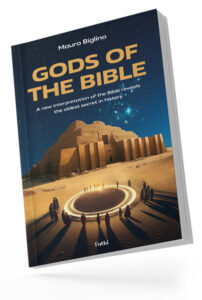
In Gods of the Bible, I develop this inquiry alongside questions regarding the identity of Yahweh, the plurality of the Elohim, and the emergence of monotheism. I invite those who wish to delve deeper to keep the Bible open as well. The book compiles and connects the relevant passages so that everyone can compare translations and follow the reasoning beyond the two verses from which we began.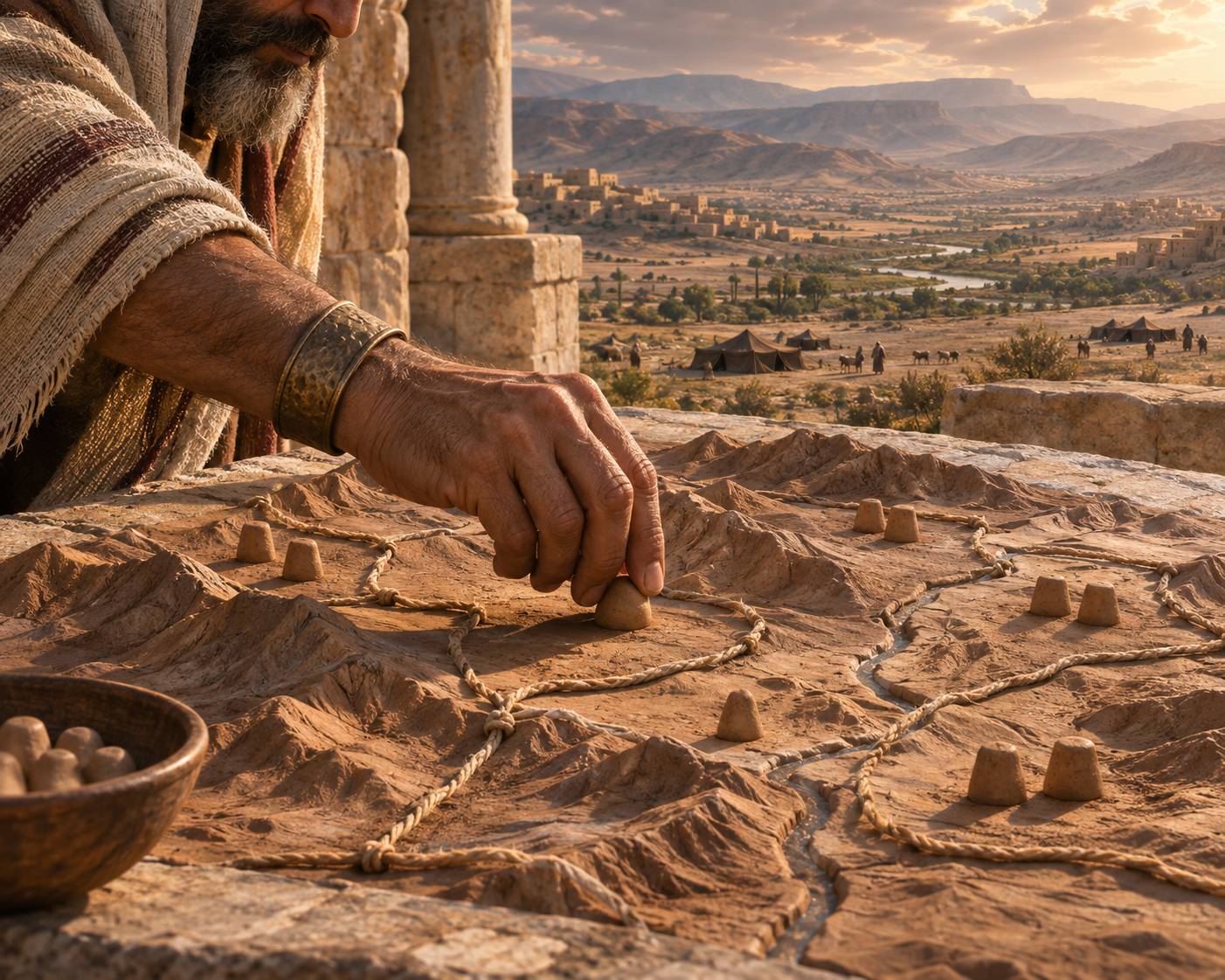
The Words That Change the Reading of Deuteronomy 32
“children of Israel”
“sons of Elohim.”
“of the angels of God.”
“of the sons of God.”
Elyon, the One Who Is Above
Jacob is Yahweh’s portion
“rope”; by extension, “portion of land, lot.”
Who distributes the peoples and who receives their portion
“For Yahweh’s portion is his people, Jacob the lot of his inheritance.”
Yahweh and Jacob in the Desert
Conclusion