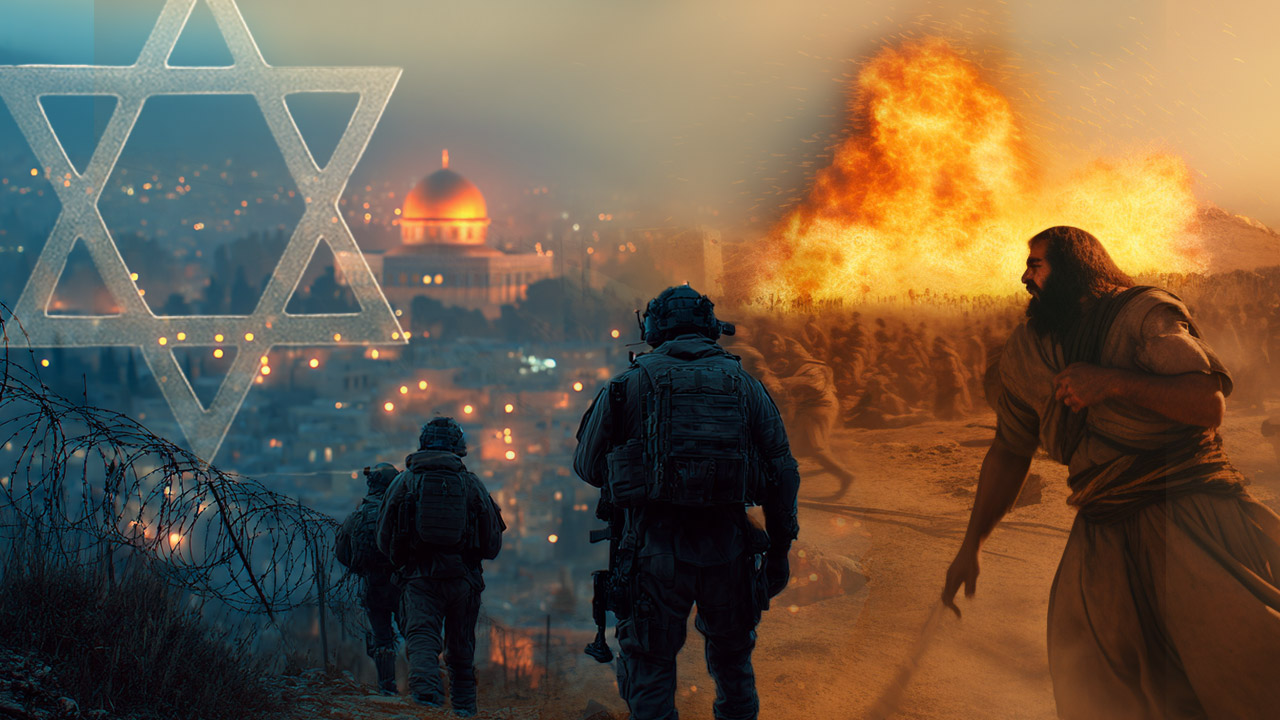


Before delving into the video “The curse of Gaza,” it is necessary to establish a fact that can no longer be ignored: according to local health authorities, approximately 60,000 Palestinians have been killed since the beginning of the Israeli offensive in the Gaza Strip. Of these victims, almost a third are believed to be children. These numbers tell us about the human cost of a bitter conflict that echoes ancient memories.
These shocking and tragic figures play a significant role in the necessary remembrance of the past, because the Old Testament is not a dead letter: its words, promises, and commands still resonate today. And even today, they are used as tools to legitimize what is happening on the contemporary scene. In this article, I will revisit the transcript of my latest video and delve deeper into some of the themes in order to expose the mechanism that turns biblical literalism into a militant ideology.
Gaza in the Bible, between memory and war
When I reread the biblical passages, Gaza emerges as a nerve center on the map of conflicts at that time.
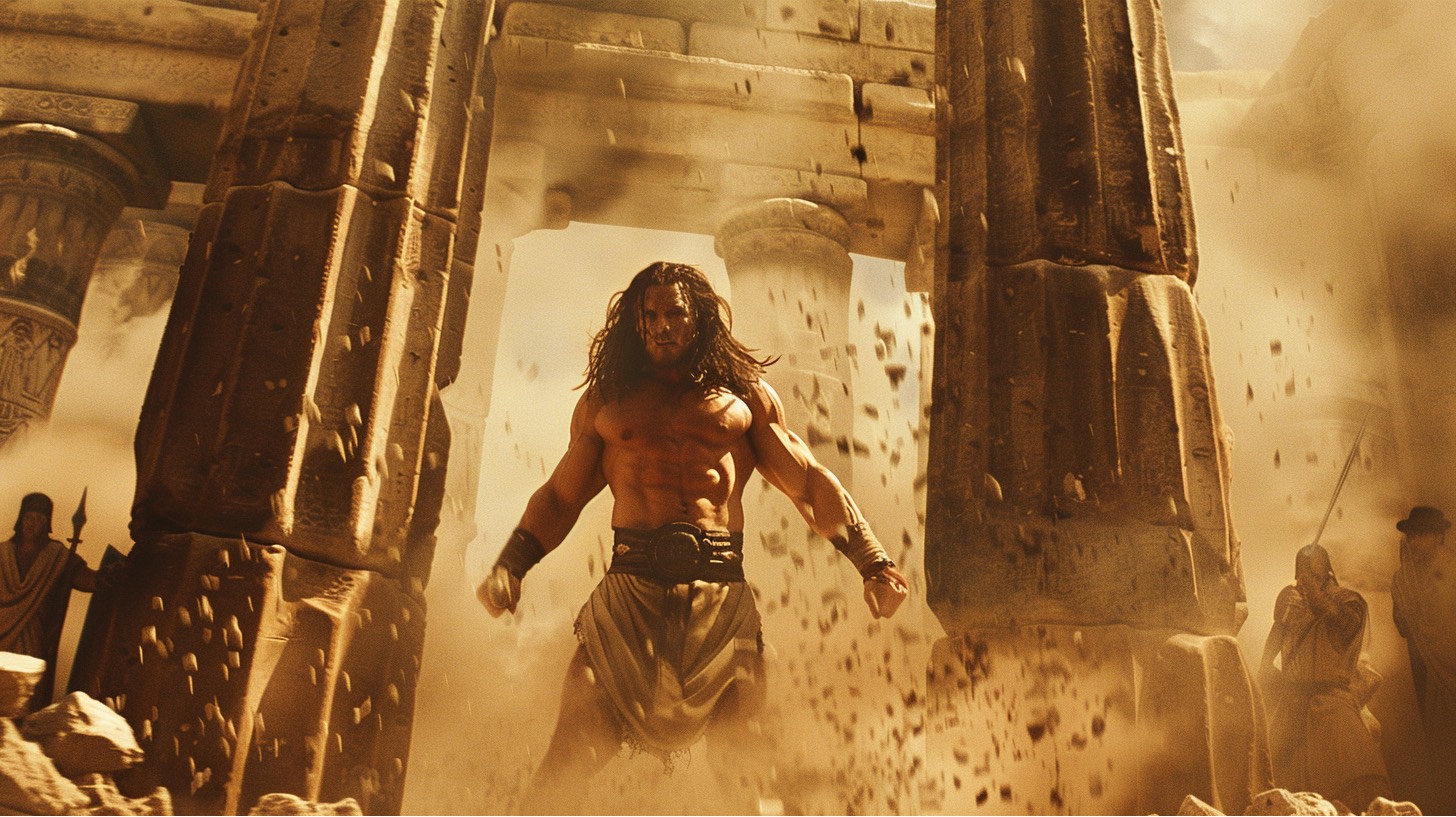
In Judges, it is the setting for the story of Samson: here he is captured by the Philistines, the enemies par excellence of the Israelites, and it is here that he performs his most sensational acts, even “uprooting the gates of the city” and dragging them away, a sign of a conflict that is both military and symbolic. In Numbers, the explorers sent by Moses report the presence, precisely in the region of Gaza, of the Anakim, the “sons of Anak,” giants who inhabited the region. The image emerges of a coveted but perceived as inaccessible land, populated by superior powers, giving rise to the idea of a conquest requiring absolute authority.
In the Prophets, Gaza is often called to judgment: Amos pronounces his severe formula—“For three transgressions of Gaza, and for four, I will not revoke my decree”—and with it establishes a memory of repeated guilt, as if the city were the natural target of punishment.
In this context, Gaza becomes a moral frontier: a place to be subjugated and reconquered, an emblem of a conflict that the Bible records with the harshness of a news report. And it is precisely this chronicle of Philistines, giants, and oracles of destruction that, if read carefully, still resonates today and offers a ready-made lexicon to justify new wars on an ancient city.
The code of destruction and the promise of territory
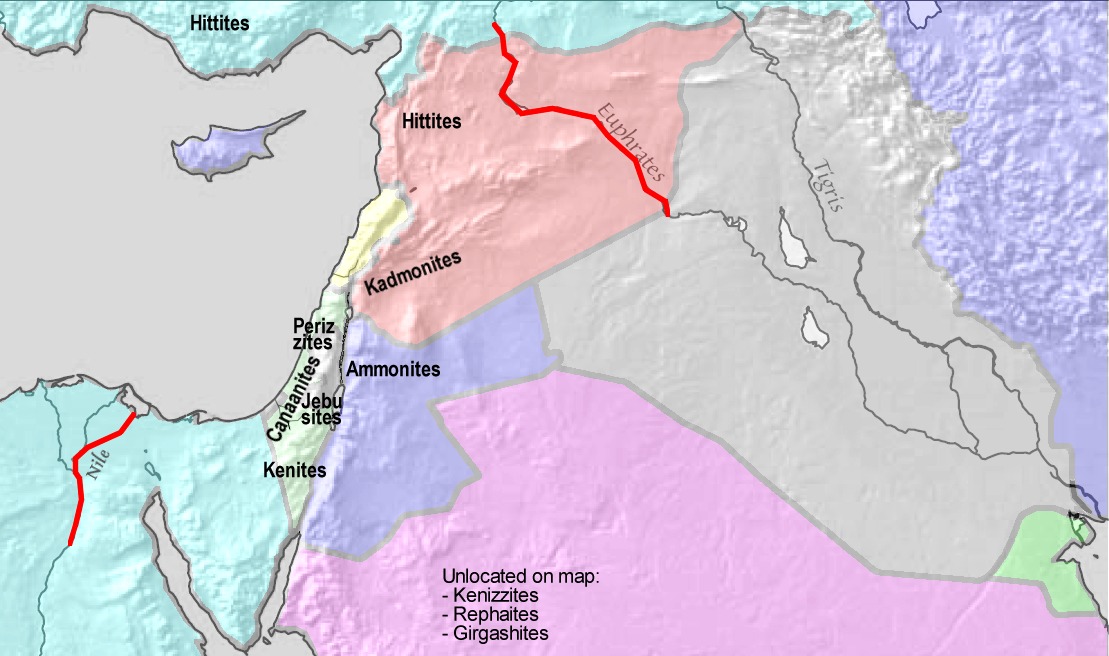
The Bible, as I have argued for years, codifies war with precise words. In Deuteronomy 20 we read: “You shall not spare anything that breathes,” so the order calls for total extermination: men, women, children, the elderly, even animals. In Genesis 15, Yahweh makes a promise to Abraham of a Greater Israel: “To your descendants I give this land from the river of Egypt to the great river, the Euphrates.” Later in Numbers, he narrows the boundaries (from the Dead Sea to the Mediterranean to Lebanon), a sign that the ultimate goal is calibrated to the test of facts. In Joshua, we find this observation: “I gave you a land you did not labor for, cities you did not build, olive groves and vineyards you did not plant.” It is an essential grammar: conquest, replacement, legitimization.
Biblical quotations in today’s political discourse
When I listen to public speeches that refer to the Bible, I see a very precise operational grammar at work. The command in Deuteronomy 25—‘Remember Amalek’—is not a simple appeal to memory: it is the ritual construction of the absolute enemy. Amalek, in the biblical imagination, is not just another adversary: he is the archetype of irreducible evil, and therefore the response must be inexorable.
For this reason, when on October 28, 2023, Benjamin Netanyahu says, “You must remember what Amalek did to you…,” he is not just quoting a verse: he is reactivating a mandate. And that mandate, in its full extent, is linked to 1 Samuel 15: “Strike Amalek, destroy everything that belongs to him… do not spare him, but kill men and women, children and infants, oxen and sheep, camels and donkeys.” The meticulous list—men/women/children/infants/animals—is a rhetoric of totality: the text defines a perimeter of annihilation that leaves no human or symbolic residue. Literally, it is the ethics of zero enemies.

The gesture at the Western Wall during the operation called “Rising Lion” accentuates this device: depositing a note with the verse “A people rises like a lioness… it does not lie down until it devours its prey and drinks the blood of the slain” transforms the letter of the text into a public act. It is not just propaganda: it is performativity. The zoomorphic lexicon—lioness/lion, prey, blood—places war in a biology of domination: the adversary is prey, the right action is to devour. Thus, the name of the military operation, taken from the verse, becomes a narrative framework: every act of war appears as the fulfillment of an ancient word.
The same happens with the Psalms, which I have long referred to as “war songs.” The passage “You have girded me with strength for battle” (Psalm 18) is not a devout caress: it is moral training. The speaker is armed by the deity, and the enemies are “bent” beneath him. Quoting the Psalms in an operational context means reading military superiority as provided by God, shifting the conflict from the political to the theological-identity terrain.
Then there is the formula of Qohelet — “a time for peace and a time for war” — used as a moral clock. If this is “the time of war,” then what is done now receives a seal of temporal legitimacy: it is no longer a question of if, but of when. Finally, the invocation of Isaiah 60 — “No more shall violence be heard in your land…” — introduces a telos, a teleological end: the peace promised afterward. In this scheme, present violence becomes a necessary toll on the road to prophetic fulfillment: the theology of the end absorbs and justifies the means of war.

I line up these elements because, read literally, they compose a rhetorical toolbox:
- Memory–mandate (Amalek): selects the enemy as ontological evil.
- Total annihilation (1 Samuel 15): suppresses any distinction between targets.
- Sacred performativity (ticket to the Wall + name of the operation): transforms the quotation into a political ritual.
- War investiture (Psalm 18): presents strength as a divine gift.
- Moral chronology (Ecclesiastes): frames war as a necessary time.
- Prophetic teleology (Isaiah 60): promises a future peace that retroactively legitimizes the present.
It is this assembly of verses that makes the Bible highly relevant in the discourse of power: not as a text for meditation, but as a manual of justification. And this is why I insist on literalism: as long as those words are taken prescriptively, they will continue to function as licenses for violence. If, on the other hand, we return them to their nature as historical-cultural chronicles, we dismantle the symbolic machinery that transforms an ancient page into a modern order.

A city wounded for millennia
I reread the history of Gaza with the intention of condensing it. From the middle of the 2nd millennium BC, it was ‘possessed by the pharaohs’; in the 12th century BC, it was one of the capitals of the Philistines; in the partition of Canaan, it fell to Judah, but effective control only came with David. Then came the Assyrians (Tiglath-Pileser III, Sargon II), a Persian period with local autonomy, Alexander the Great who razed it to the ground and its subsequent reconstruction; then the Egyptians, the Seleucids, the Maccabean siege with hostages handed over to save it; in 95 BC, Alexander Jannaeus devastated it again; Pompey made it a free city; Herod controlled it; after his death, it passed to Roman Syria; in 66 AD, the Jews destroyed it again. It is a long wave of conquest, loss, annihilation, and reconstruction: the same plot that we recognize today with modern tools but with ancient words.
Current events as an echo of literalness
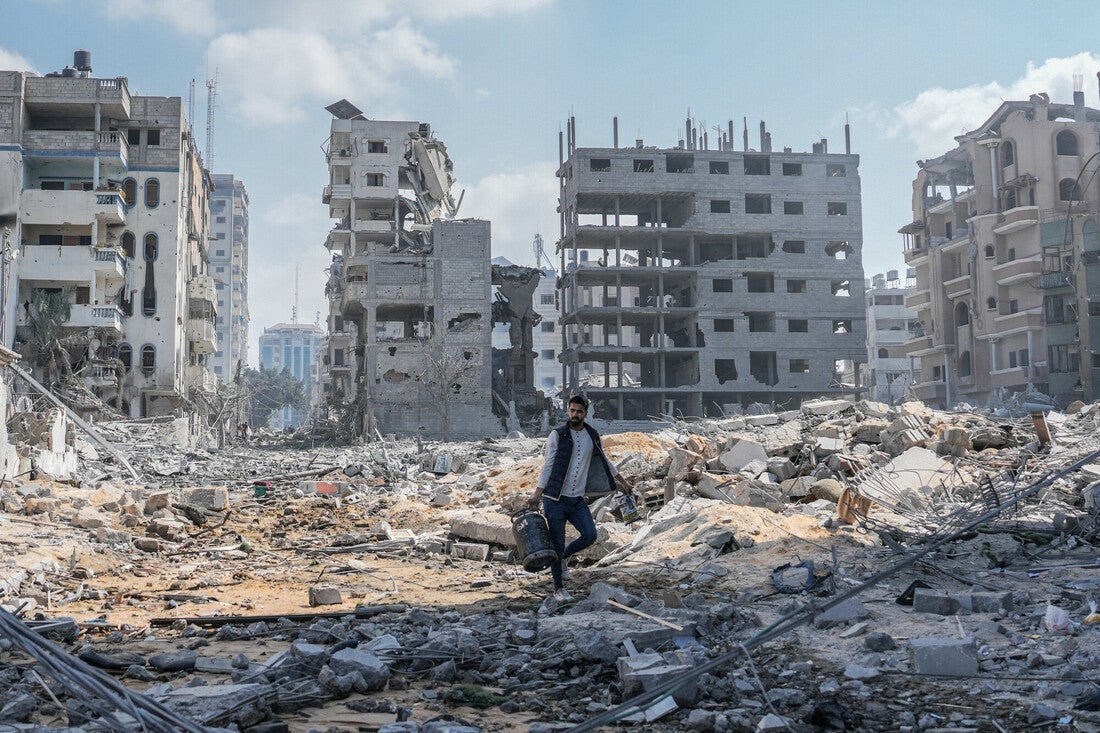
Today, the international community uses very harsh expressions. The UN Independent Commission on the Palestinian Territories, in its report of September 16, 2025, speaks of “genocide” in Gaza, with the intent to destroy all or part of the Palestinian people; It cites 53,000 deaths, 83% of them civilians, and documents the destruction of schools, hospitals, cultural and religious sites, the blockade of food, water, and energy, and even attacks on fertility centers. Words and deeds that resonate with the ancient matrix: “Kill them all,” “destroy the nations.” If we consider those texts sacred in a prescriptive sense, the script feeds itself.
Conclusion: read to understand, not to obey
I repeat: the Old Testament does not speak of God, but narrates wars and orders of extermination. If we read them as historical and cultural chronicles, we recognize the origin of the ideologies that are setting Gaza ablaze today. If we sanctify them, we turn them into mandates. The way out is literalism: understanding what is really written in order to unmask the political use of the Bible. Only in this way can we break the curse of Gaza: interrupt the echo that, for three thousand years, has transformed memory into license and faith into a weapon.