



From Mount Carmel to Elijah’s fire, the biblical text recounts a power struggle between the Elohim, territories and peoples forced to choose which ‘lord’ to serve. Baal, Bealim. Names that appear frequently in the Bible, but which are rarely understood for what they are in their original context. In everyday language, and especially in later religious tradition, Baal has almost automatically become the name of a ‘pagan’ deity, an adversary of the God of Israel. Subsequently, some of his forms have even been transformed into demons: Belfagor, Beelzebub, lords of the underworld, negative powers opposed to the one God. But if we return to the texts, if we try once more to assume that the ancient authors meant what they wrote, the picture that emerges is very different. Baal did not originate as a proper name. It originated as an epithet. It means master, lord. The master of a house, the master of a field, the husband as the ‘master’ of his wife, according to the patriarchal mindset of that world. It was only later, with the addition of the definite article and through cultic usage, that Baal came to signify ‘the Lord’ par excellence. And here an interesting first analogy immediately emerges. According to tradition, the Israelites did not pronounce the name of their Elohim, Yahweh, and replaced it with Adonai, ‘my Lord’, ‘our Lord’. The Canaanites, similarly, tended to use Baal to refer to their divine lord, probably also avoiding pronouncing the deity’s proper name. So, right from the start, we are not dealing with two radically separate worlds, but with very similar linguistic and religious practices. The Bible mentions many Baals: Baal Berith, Baal Hammon, Baal Peor, Baal Zebub, Baal Zefon and others besides. We are not dealing with a single abstract figure, but with a collection of local deities, titles, epithets and territorial lords. The Baals belong to the same conceptual universe as the biblical Elohim. They are powers linked to places, peoples, mountains, highlands, cities and territories. Just as Yahweh is presented in ancient texts as the Elohim of Israel, so too did other peoples have their own lord, their own Baal, their own point of reference. The Book of Deuteronomy contains a fundamental, often-discussed passage in which Elyon divides the nations among the sons of the Elohim. The logic is clear: every people has its own divine reference point, its own supreme ruler, its own leader. We are not yet in the theological monotheism of later centuries. We are in a pluralistic, competitive, territorial world. And indeed, when one people prevailed over another, it did not merely impose its political dominion. It also imposed its own god. Military power and religious power went hand in hand. This is the context in which the conflict between Yahweh and Baal must also be understood. One aspect worth emphasising is the semantic proximity between Baal and Adonai. Baal means ‘lord’ or ‘master’. Adonai means ‘my lord’ or ‘our lord’. The Israelites did not use Baal to refer to Yahweh, because that term was associated with Canaanite and Phoenician cults, but the basic meaning is not far off. Both refer to a relationship of lordship, possession and command. The difference, therefore, is not strictly linguistic. It is political, cultic and identity-related. The Israelites were to serve Yahweh. Not because the other Elohim did not exist, but because Yahweh demanded exclusive loyalty from his people. This point is crucial. The Bible does not initially present Yahweh as the only God existing in the metaphysical sense of the term. It presents him as the Elohim who has made a covenant with Israel and who does not tolerate betrayal. This is why the worship of Baal becomes a problem. Not because Baal is ‘non-existent’, but because he is a rival. Among the Baals mentioned in the Bible, one of the most significant is Baal Peor. The name refers to a cult linked to the exposure of genitalia and sexual practices. Biblical tradition presents him as a grave temptation for the Israelites, who, on several occasions, are drawn into the cults practised by Moabite and Midianite women (who all belong to the same family as Abraham). Here, the biblical account is extremely harsh. Yahweh does not tolerate his people turning to other Baals. When the Israelites allow themselves to be drawn into the cults of Baal Peor, the punishment is bloody: the text speaks of thousands of deaths. And in the Book of Numbers we find the terrible order to exterminate the Midianites, accused of having led Israel to betray Yahweh. The matter becomes even more interesting when we recall that the Midianites, according to the same biblical tradition, are descendants of Abraham through Keturah. They are therefore not a distant and unknown people. They are relatives of the Israelites. And it is precisely amongst the Midianites that Moses encounters Yahweh. Jethro, the Midianite priest with whom Moses finds refuge after fleeing Egypt, is presented as a priest of Yahweh. After the exodus from Egypt, Jethro acknowledges that Yahweh is the greatest among the Elohim. Here too, the text is crystal clear: Jethro does not say that Yahweh is the only God in existence. He says that Yahweh is the greatest, the most powerful, the most effective. The comparison presupposes a plurality. Another important Baal is Baal Zebub, the so-called ‘lord of the flies’, associated with Ekron, one of the Philistine cities. His original name may have been Baal Zebul, meaning ‘lord of the place’, ‘lord of the dwelling’, or perhaps ‘lord of power’. The transformation into Baal Zebub, ‘lord of the flies’, may have been a polemical, sarcastic or derogatory act: a way of ridiculing a rival deity. Later, via Greek and Christian tradition, Baal Zebub became Beelzebub, one of the quintessential demonic names. This is a highly instructive development. As Yahweh is gradually transformed into the spiritual, unique, omniscient, omnipotent and transcendent God of theology, the other deities do not disappear: they are simply reclassified. They become demons. Yahweh’s ancient political and religious rivals become God’s spiritual rivals. The territorial and religious conflict is transferred to a metaphysical plane. Yet at its core, the Bible still bears traces of a far more tangible world. The cult of Baal held particular significance in the Northern Kingdom, in Samaria, especially during the reign of King Ahab and Queen Jezebel, or Izebel, of Phoenician origin. According to the biblical account, Jezebel favoured the cult of Baal and promoted it at court, setting it in competition with Yahweh. Ahab appears as a king who moves with a certain ease between different cults, different alliances and different powers. And this is perfectly understandable in the political context of the time. Choosing a god meant choosing protection, legitimacy and a political line. It is against this backdrop that Elijah appears. Elijah is the prophet of Yahweh. His name appears in various forms, such as Eliyah and Eliyahu, both composed of elements referring to El and Yah/Yahu. This, too, is an interesting linguistic detail, particularly when considered in relation to the abbreviated forms of Yahweh’s name: the digram, the trigram and the tetragram. In the biblical account, Elijah was active in the 9th century BC, during the reign of King Ahab. His story is recounted in the Books of Kings, specifically in the First Book of Kings. The central issue is the clash between Yahweh and Baal. Not an abstract theological debate. Not a spiritual confrontation. But a public display of power. Which Elohim is more effective? Which is capable of intervening in a tangible way? Which deserves to be served? In the First Book of Kings, chapter 18, Elijah summons the people and the prophets of Baal to Mount Carmel. There are 450 prophets of Baal. Elijah is alone. But the point is not one of numbers. The point is technical, practical, concrete. The challenge consists of preparing two sacrifices: two oxen, two piles of wood, two altars. No one is to light the fire. The Elohim capable of responding with fire will prove himself to be the one to follow. Elijah says: ‘You shall call upon the name of your Elohim; I shall call upon the name of Yahweh. The Elohim who responds with fire—that will be the true Elohim.’ This statement is extremely important. Elijah does not say that Baal does not exist. He does not say that Baal is a figment of the imagination. He treats him as a rival god. The issue is to ascertain which of the two is present, powerful, and willing to intervene. The priests of Baal call upon their lord all morning long. But nothing happens. At that point, Elijah mocks them. He tells them to shout louder. Perhaps Baal is busy, perhaps he is travelling, perhaps he is asleep and needs to be woken up. Taken at face value, this may seem like mere irony. But it is not just that. Ancient traditions concerning Baal do indeed speak of a deity who is often absent, a traveller, associated with the clouds, with movement, and with high places. Baal is also called the ‘knight of the clouds’, an epithet which in the Bible is also applied to Yahweh. Once again, the two worlds draw closer. The most interesting part of the story comes when Elijah prepares his own altar. Unlike the priests of Baal, Elijah does not merely arrange wood and meat. He builds an altar out of twelve stones, one for each tribe of Israel. He digs a small channel around the altar. Then he orders a large quantity of liquid – which the text refers to as water – to be poured over the stones, the wood and the meat. The command is repeated several times. The liquid flows, soaking the whole structure and filling the trench as well. In the traditional interpretation, this gesture serves to make the miracle even more astonishing: if everything is wet, only God can kindle the fire. But if we read the text carefully, and if we continue to pretend that the details matter, we can ask ourselves another question. Was that liquid really just plain water? The ancient Near East was familiar with natural flammable substances: hydrocarbons, bitumen, naphtha, and clear, combustible oily liquids. Terms relating to these substances appear in various Semitic and Near Eastern languages. Even the stones in those regions could contain or be impregnated with bitumen and sulphur. The text states that Elijah does everything according to the words of Yahweh. He is not improvising. He is carrying out instructions. This detail is crucial. The challenge was devised by Elijah and Yahweh. Baal is absent. Yahweh, on the other hand, is present; he gives instructions, sets the scene, and tells his prophet what to do. Therefore, the event can be interpreted not as a supernatural intervention, but as a concrete, prepared, and planned action. The story of Mount Carmel does not end with the fire. After Yahweh’s victory, Elijah orders the prophets of Baal to be captured. No one is to escape. They are taken to the Kishon stream and killed there. The text is extremely harsh. There is no mercy. There is no forgiveness. Those who have chosen the wrong Elohim pay with their lives. This is perfectly consistent with the world of the Old Testament. Yahweh does not appear as the good, spiritual, universal and merciful God developed by later theology. He appears as a leader, a ruler, a Lord of hosts who demands loyalty, forges alliances, fights rivals and punishes traitors. The challenge with Baal is not a doctrinal dispute. It is a war for power. Once again, the Bible brings us back to a constant fact: the governance of peoples passes through the Elohim. The Elohim are not abstract entities. They have territories, alliances, armies, priests, prophets, tools, techniques and places of worship. They demand obedience and offer protection. When they win, they impose their own worship. When they lose, they are replaced, degraded, demonised. This has happened to many Baals. It happened to Baal Peor, who became Belfagor. It happened to Baal Zebub, who became Beelzebub. It has generally happened to the rival deities of Yahweh, transformed by theology into demons. But the original trace is still legible: they were competing powers in a pluralistic world. One might wonder why we should concern ourselves today with Baal, Elijah, Mount Carmel, sacrifices and ancient conflicts between the Elohim. The answer is simple: because those texts still speak to the mechanism of power. Names change, languages change, flags change, but the structure remains surprisingly similar. There is that contested territory. There are powers demanding allegiance. There is a people forced to choose, or to suffer the choices of others. There are victors who decide the fate of the vanquished. And there are religious, ideological or political narratives used to justify violence. In the story of Elijah, fire decides who is right. Immediately afterwards, blood confirms who has won. This logic does not belong solely to the past. We still find it today whenever a power presents itself as just, necessary, superior, authorised by God or by history, and uses this claim to eliminate its adversary. The Bible, read in this way, is not a distant book. It is an extraordinarily topical document on the nature of power. The method remains the same: let’s pretend. Let’s pretend that Baal was not born as a demon, but as a lord. Let’s pretend that Yahweh is not the metaphysical God of theology, but the concrete Elohim of Israel. Let us pretend that Elijah is not performing a spiritual miracle, but carrying out a procedure ordered by his superior. Let us pretend that the fire from heaven is a material, technological act—a trigger set in motion from above, observed by a people who could not comprehend its nature. By pretending this, the text becomes more coherent. Baal is no longer a pagan caricature. Yahweh is no longer confined within later theological categories. Elijah is no longer merely a holy prophet, but the man of an Elohim engaged in a trial of strength. Mount Carmel is no longer the scene of a miracle, but the site of a clash between powers. And the Bible returns to being what it appears to be when read without adding what is not in the texts: the story of covenants, wars, territories, technologies, fears, obedience and blood. An ancient story, certainly. But perhaps not as ancient as we would like to believe.There was not just one Baal
Yahweh, Baal and the problem of the ‘Lord’

Baal Peor: the lord of sex

Baal Zebub and the origin of demons
Jezebel, Ahab and the cult of Baal

Elijah: the prophet of Yahweh
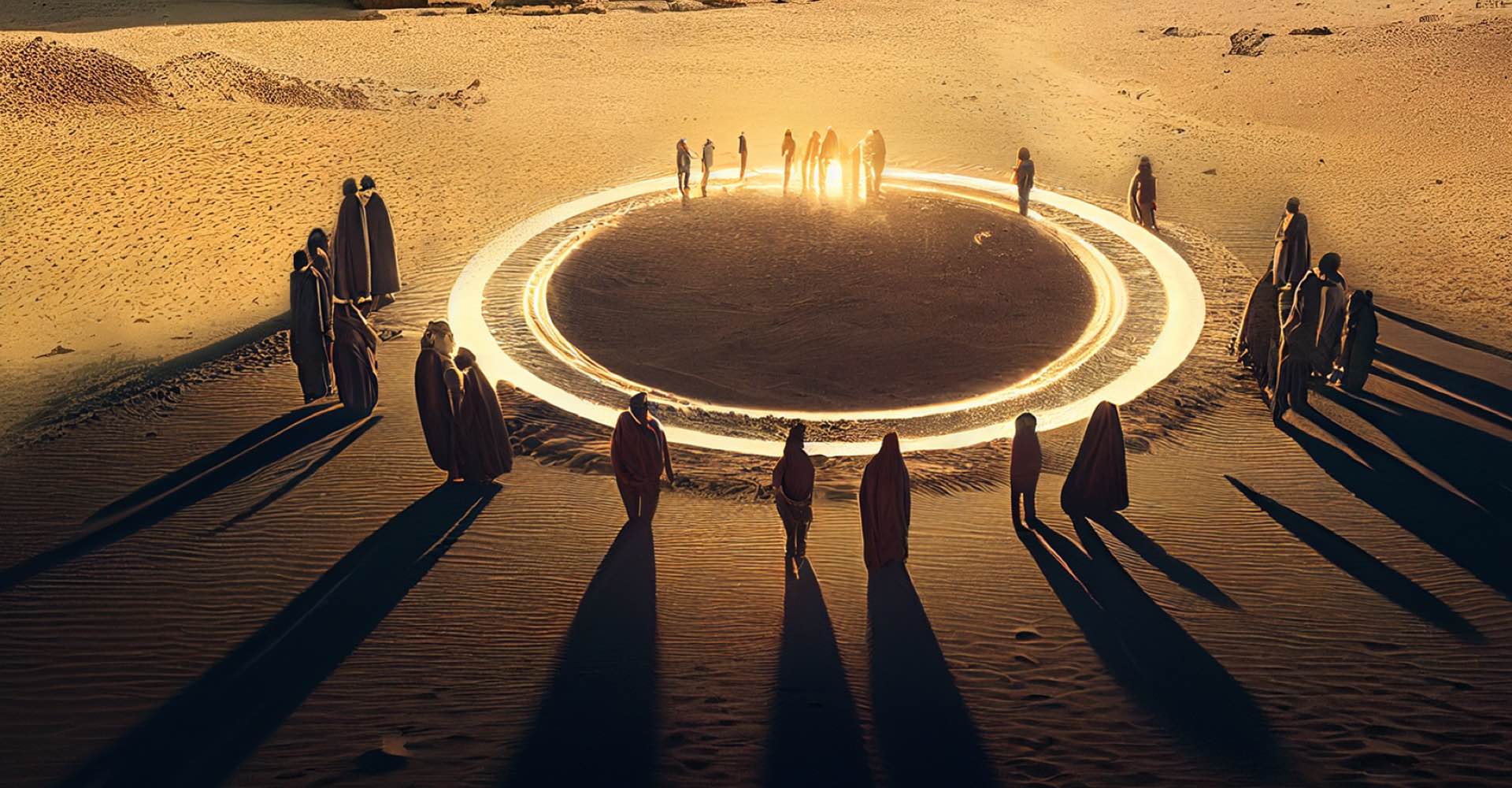
The challenge on Mount Carmel

The ‘fire from the sky’ and Elijah’s preparations
Blood after the fire
The Elohim and the governance of peoples
Why this story is still relevant today
Pretending, but going all the way


