



Who were the gods we encounter in the Odyssey and the Iliad? To try to answer this, I’ll start with the actions the poems attribute to them: they sire children, rule, travel, fight, and vie for control over events. When I compare these stories to certain passages in the Bible, I find similarities that I believe are worth examining. The approach is one that those who follow my work know well: let’s pretend it’s true. For the duration of our reading, let’s take what the authors say seriously and observe the picture that emerges. It is a working hypothesis that allows us to examine these texts beyond the usual interpretations. In the Odyssey, the Phaeacians—the people who take in Odysseus after his shipwreck—are called anchítheoi: “close to the gods.” The word takes on a particularly concrete meaning when we read the genealogy of their royal family. Alcinous is the son of Nausithous, born of the union of Poseidon and Peribea, daughter of Eurymedon, king of the Giants. The ruler who hosts Odysseus is therefore, in the story, Poseidon’s grandson. Odyssey, V, 34–35; VII, 56–66. This closeness is also clarified in another way. Alcinous explains that the gods appear openly to the Phaeacians, participate in their banquets during sacrifices, and, when encountering them along the road, do not hide their identities. This familiarity is motivated precisely by kinship, which the king also mentions in connection with the Cyclopes and the Giants. Odyssey, VII, 201–206. This is the point I wish to emphasize: Homer describes family relationships, encounters, and interactions. In the world of the poem, the begetting of children establishes a direct bond between men and the gods. Let us now turn to the Bible. In the first verses of Genesis 6, the bene ha-elohim, the “sons of the Elohim,” take the daughters of men as wives. The passage mentions the nefilim, traditionally rendered as “giants”: figures remembered as heroes of antiquity, famous men. The precise relationship between these groups requires careful attention: the passage is brief and presents interpretive difficulties. The account of the unions and births, however, is explicit. Genesis 6:1–4. Comparing this episode to the genealogy of Alcinous, I find a similar structure: beings belonging to the divine world enter the history of human families and are associated with the origin of exceptional figures. If we adopt my “let’s pretend” approach, the question becomes concrete: what does it mean to say that one of them unites with a woman and has a son with her? What idea of these beings emerges from the actions attributed to them? The words also deserve attention. In the video, I refer to a passage from Cratylus in which Plato, through Socrates, links the names of the gods to the Greek verb theîn, “to run.” The reasoning concerns the movement of the stars, which early humans are said to have venerated as deities. It is an etymological proposal within the dialogue: it is not sufficient to establish the historical origin of theós, nor does the verb in and of itself mean “to fly upward” . Plato, Cratylus, 397c–d. This reference introduces a recurring theme: the gods have points of departure and destinations; they travel distances and reach other beings. The nature of these movements suggests further comparisons with the Bible. Before discussing these journeys, however, let us examine how the governance of the Earth is described. Deuteronomy 32:8 recounts that the Most High established the boundaries of the peoples. Here we encounter an important textual variant: the Masoretic Text reads “sons of Israel,” while among the Qumran manuscripts the reading “sons of God” is attested. The latter brings to the fore a plurality of divine beings associated with the organization of the nations. The variant in Deuteronomy 32:8. The following verse identifies the people of Jacob as part of Yahweh. Later, in verse 12, it is specified that Yahweh guided them alone, without any foreign god alongside him. The account thus links a people to a specific divine figure. Deuteronomy 32:8–12. In the reading I propose, Elyon—a title that can be translated as “He who is above or on high” without any superlative connotation—represents the authority that distributes, while Yahweh is the recipient of a portion. This is an interpretation of the relationship between the two figures: upon this I base my comparison with the Greek world, where Zeus exercises his authority over the other gods. I am particularly interested in the relationship between power and territory: the narratives present peoples entrusted to beings who guide them, protect them, and intervene in their affairs. Belonging to a deity thus has very concrete consequences in collective life. The comparison continues in the Critias, a text distinct from the Homeric epics, in which Plato recounts that the gods divided the Earth among themselves and received their respective regions by lot. Once they had obtained their territories, they took charge of the people who inhabited them. Plato draws on the image of the shepherd and the flock. The gods guide human beings through persuasion, steering their souls as one steers a boat with a rudder. The metaphor describes a relationship of governance: someone sets the direction and has the means to ensure it is followed. There is also a detail that I highlight in the video: Hephaestus and Athena are both assigned the same region, Attica, because they share a nature and interests linked to wisdom and the arts. In Deuteronomy, on the other hand, it is emphasized that Yahweh guides Jacob alone. The methods differ, but in both accounts we find a distribution of authority over territories and peoples. Plato, Critias, 109b–d. Let us now return to the Odyssey. Zeus sends Hermes to Calypso to inform her of the decision regarding Odysseus’ return. Before setting out, the messenger fastens his golden sandals to his feet, which carry him across sea and land with the speed of the wind. The poem describes an object worn before the journey and attributes to it a role in transportation. The Odyssey, Book V, 43–54. Another episode concerns Hera. In Book XIV of the Iliad, the goddess puts on her sandals and travels a route that includes Pieria, Haematia, the mountains of Thrace, and Mount Athos, without setting foot on the ground. Later, she travels with Hypnos, the God of Sleep, and the narrative describes the treetops rustling beneath their feet. Iliad, Book XIV, 186; 225–230; 281–286. I am struck by the attention paid to the route and the landscape traversed. In my reading, I try to consider these details as descriptions of an actual journey and to ask myself what function the objects used might serve. n Book V of theIliad, the horses of Hera’s chariot advance between earth and sky. Homer conveys their speed through a simile: each stride covers the distance that a man, seated on a hilltop, can take in with his gaze out over the sea. The passage conveys extraordinary speed, without providing sufficient data to calculate it. Iliad, V, 767–776. I also focus on the epithet hypsēchées, traditionally rendered as “loud-neighed” but which literally means “making noise on high”: it evokes a loud, resonant sound, referring in this context to the neighing of the horses. In my comparison with the Bible, I highlight this auditory element, which I associate with the roar described by Ezekiel. LSJ Lexicon, entry ὑψηχής. In Book VIII, we encounter another detail. Hera and Athena prepare to intervene in battle: Athena arms herself, climbs onto the chariot, and grasps a great spear. Zeus stops them with a threat: he will strike the horses, destroy the chariot, and inflict wounds on the two that will not heal even in ten years. In the narrative, therefore, even the gods can suffer damage and must contend with a superior force. Iliad, Book VIII, 381–408. It is from the combination of these elements that my technological hypothesis arises. This also includes the reference to the horses “under the chariot,” which is strange and, on its own, does not constitute a technical description of the vehicle. When I propose thinking of the “horses” as engines, I am putting forward an interpretation: how would the scene change if the objects described were means of transportation subject to damage and destruction? This comparison leads to Ezekiel. At the beginning of the book, the prophet sets the story in a specific time and place, by the river Chebar. He describes something coming from the north: a stormy wind, a great cloud, fire, and radiance. Living beings and wheels follow, with coordinated movements and an intense auditory component. Ezekiel 1. In chapter 3, a ruach lifts him up; behind him, he hears the roar of the wings and the wheels. In the video, I read a translation according to which the noise accompanies the kavod of Yahweh as it rises from its place. One point needs to be clarified regarding this phrase: the rendering “rises” adopts a proposed correction to the Hebrew text; other translations, including the CEI 2008, retain a formula—which is difficult to explain—of the divine glory being blessed by the place where it is located. The prophet’s ascension and the roaring sound are, however, present in the passage. Ezekiel 3:12–14; textual note from the NET Bible. In these verses, we encounter the translations “spirit” for ruach and “glory” for kavod. I prefer to retain the Hebrew terms in order to focus attention on what the narrative attributes to them: something lifts the narrator, something produces a roar, and a luminous manifestation fills the scene. It is this descriptive concreteness that I contrast with the journeys of the Homeric gods. Ezekiel himself speaks of “divine visions.” This expression belongs to the text and must be respected; on its own, however, it does not resolve the question of the nature of the experience being narrated. The interpretation I propose explores the possibility of a concrete reference, while keeping this hypothesis distinct from the literary description. The genealogies of the Phaeacians, the unions in Genesis 6, the dispersion of the peoples, the journeys of the gods, and the clamour in Ezekiel form a broad field of comparison. The similarities can be studied as shared narrative motifs; I also propose that we ask ourselves whether they preserve the memory of experiences that the ancients expressed using the language at their disposal. To verify this possibility, we would need evidence beyond textual analogies. My invitation begins with reading: let us observe who acts, what tools they use, and what effects they produce. Homer’s gods are portrayed to us through bodies, relationships, interests, and conflicts. Taking these details seriously is the first step toward asking the question once again: who were they, in the eyes of the people who passed down their stories?The Phaeacians and Their Kinship with the Gods
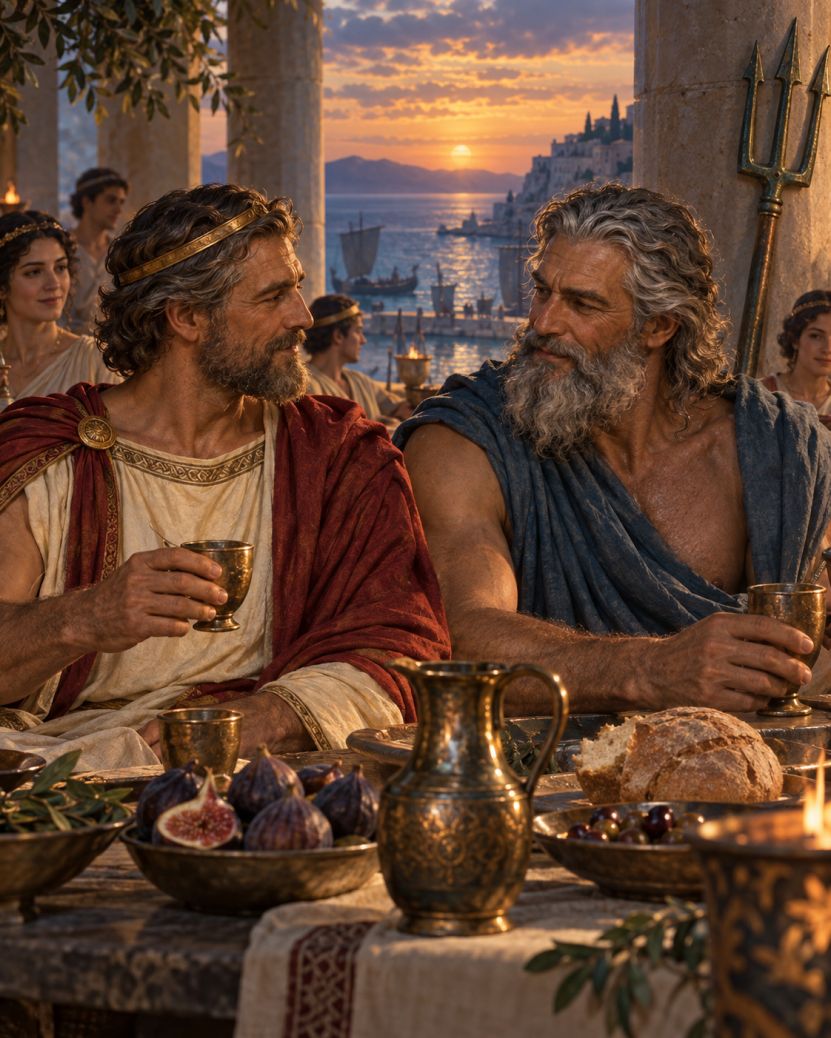
The Unions in Genesis 6 and the Heroes of Antiquity
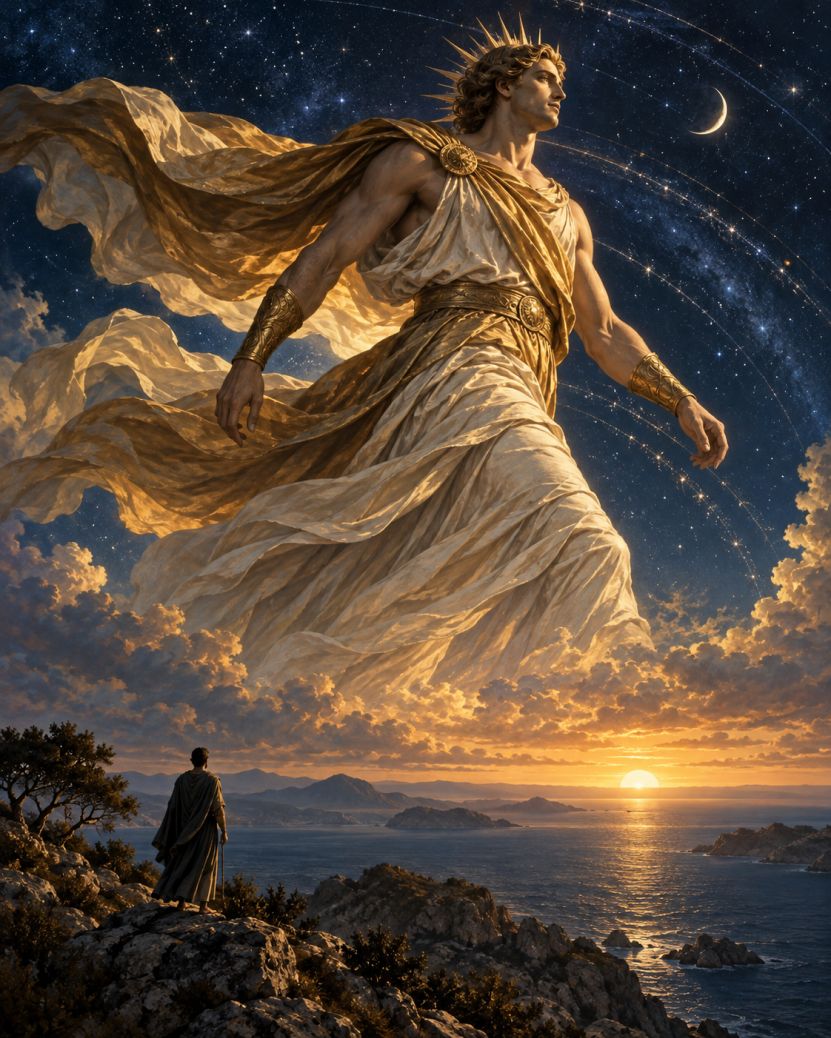
Theoi and the Reference to Movement
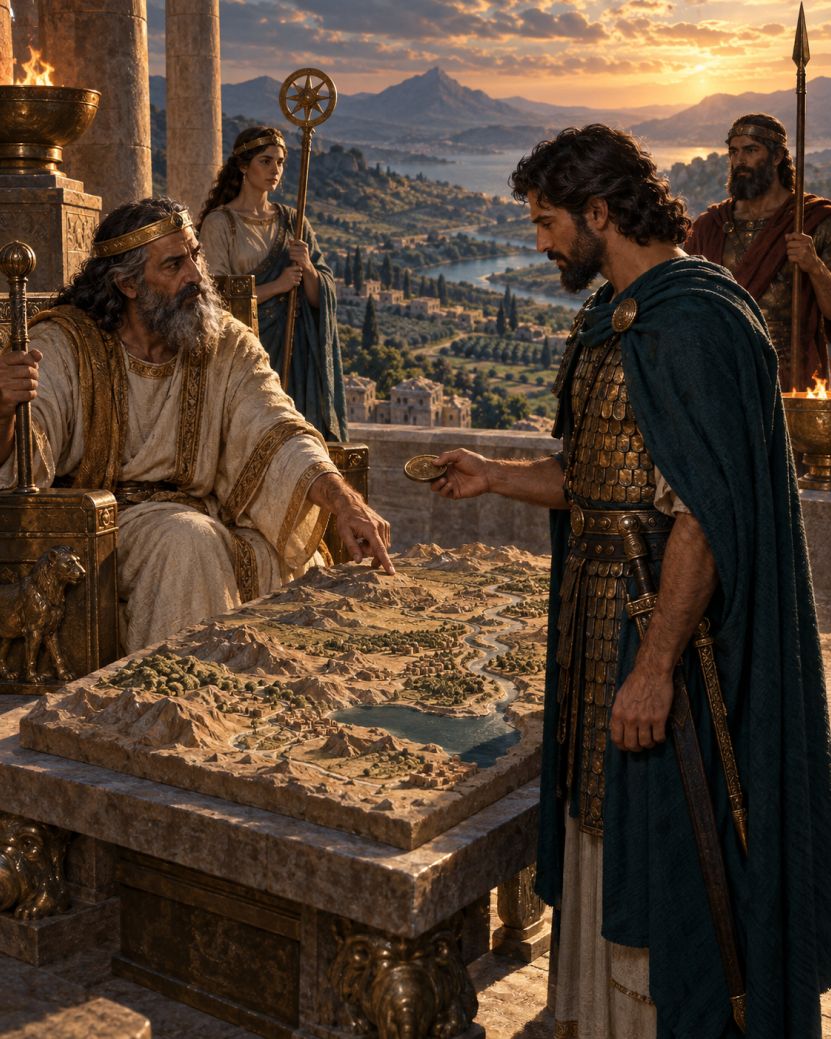
Elyon and Yahweh in the Division of the Nations
In the Critias, the gods rule like shepherds
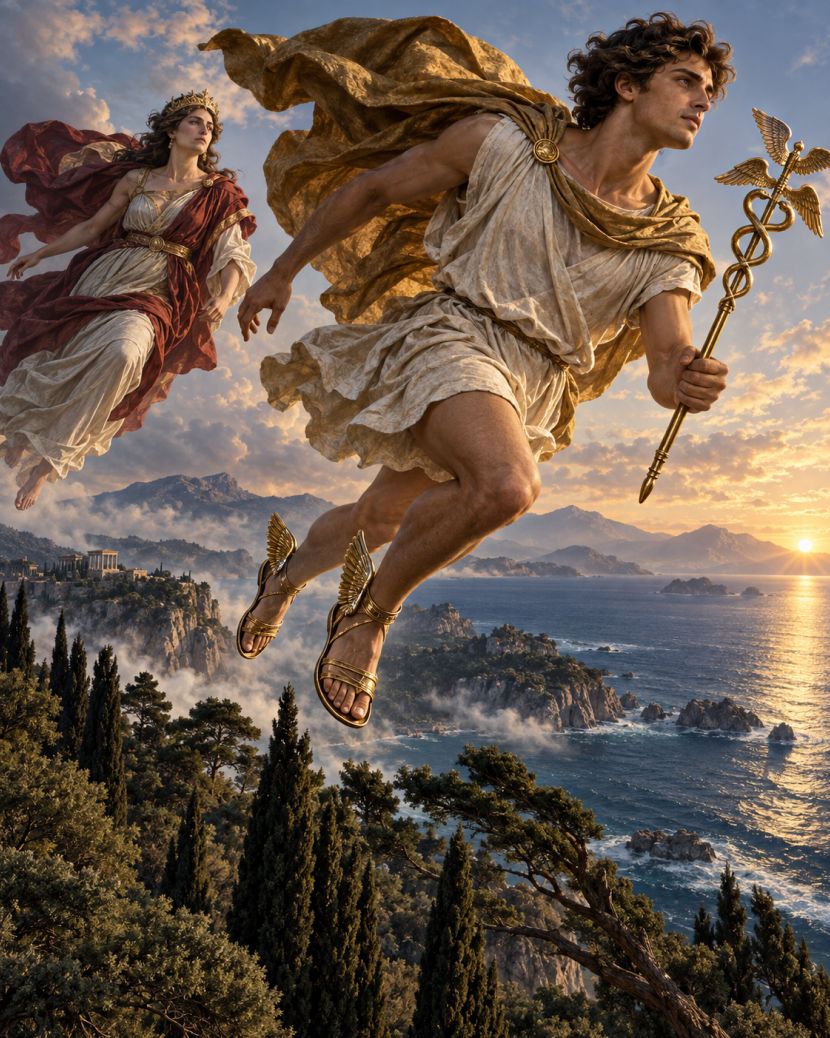
Hermes’ Sandals and Hera’s Journey
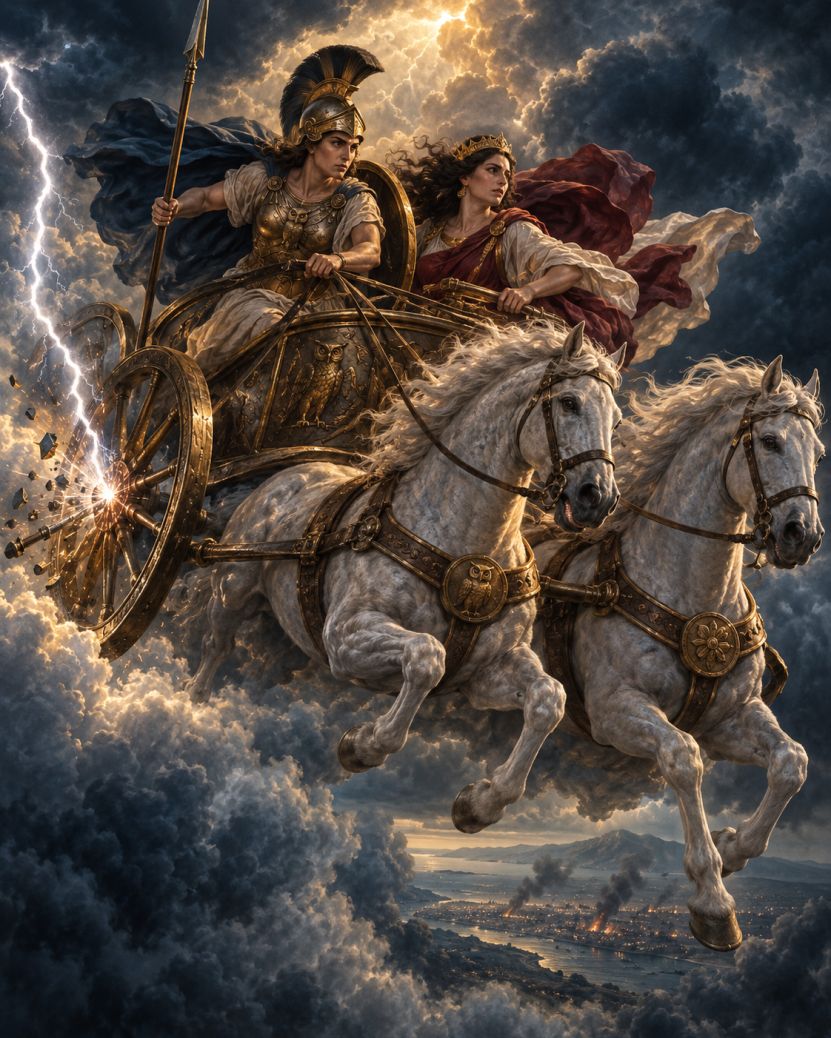
Chariots, Noise, and Gods Who Can Be Wounded
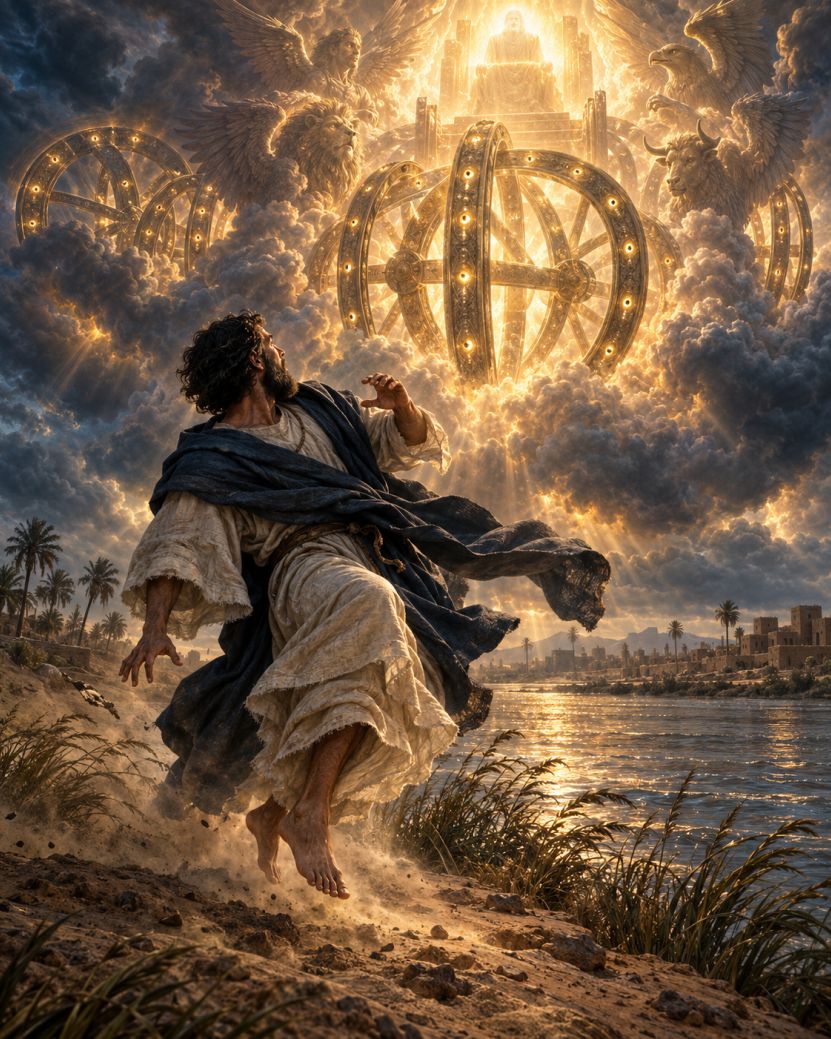
Ezekiel, the Ruach, and the Kavod of Yahweh
What Do These Stories Ask of Us?


