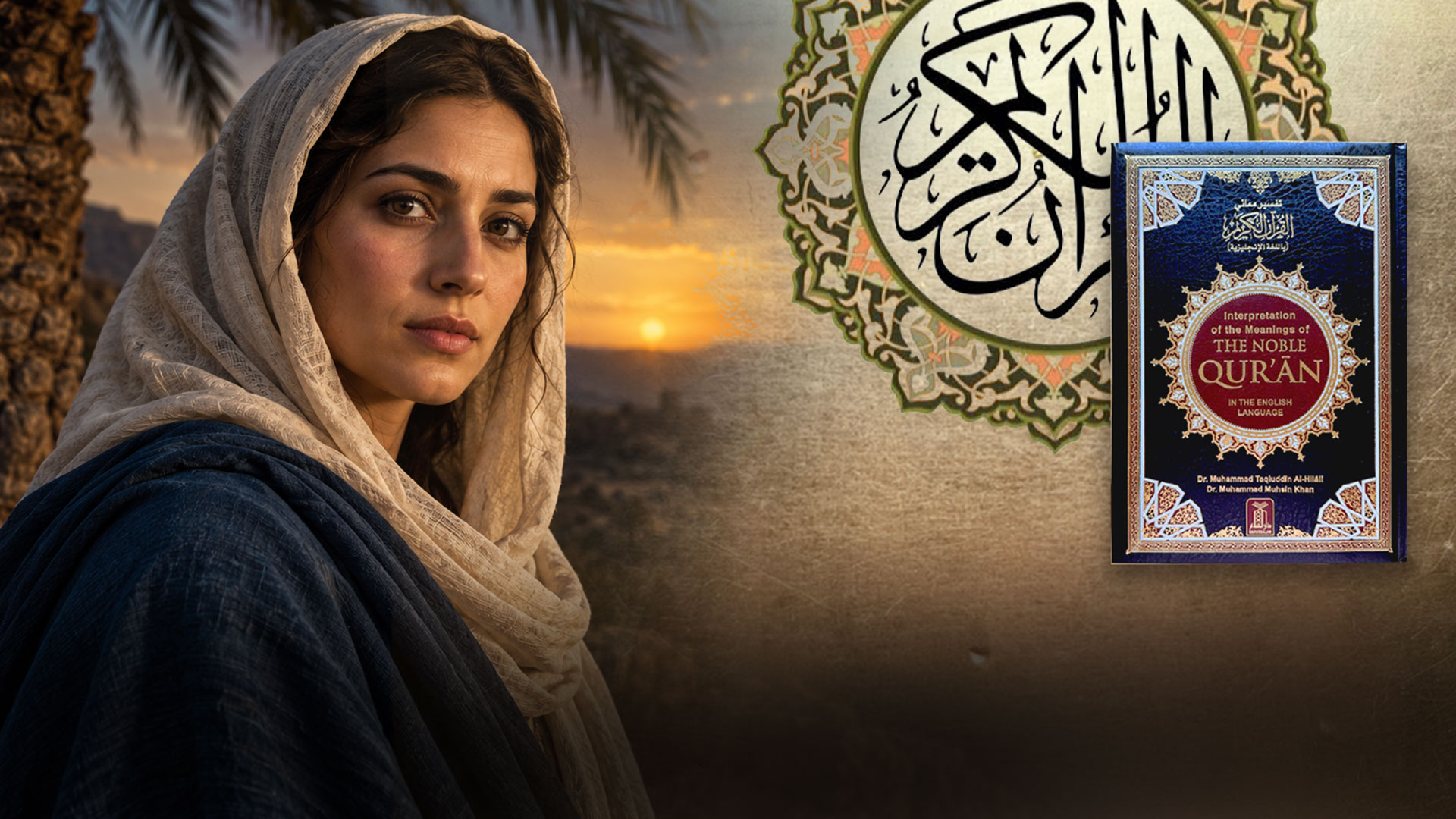


What does the Quran say about Mary and the birth of Jesus? In this video dedicated to Maryam, I propose comparing the accounts while setting aside, for a moment, what we have learned from tradition. Sura 19, which bears her name, presents a familiar story, but the passages reveal differences that deserve attention. The section between verses 16 and 36 of Sura Maryam, in fact, presents an account of Jesus’ birth that is profoundly different from that of the canonical Gospels. The main characters are Maryam, the rūḥ sent by Allah, the child ʿĪsā, and the community to which Maryam returns after giving birth. In the background, Hārūn, Maryam’s father, and her mother are also mentioned. These figures do not all play a direct role, but they contribute to shaping the meaning of the story. Paul writes that Jesus was “born of a woman” (Galatians 4:4), without recounting his conception. His silence does not prove that he denied the virgin birth, but this tradition is not expounded upon in his letters. Mark does not narrate the birth of the Messiah. Matthew and Luke offer different accounts: in the former, we find Joseph’s dream, the Magi, and the flight into Egypt; in the latter, the Annunciation to Mary, the census, and the shepherds. The apocryphal writings expand on Mary’s biography. By the time we reach the Quran in the 7th century, these stories had been circulating for centuries. I am interested in observing what is preserved, what changes, and what meaning the new narrative takes on. Maryam turns away from her people and retreats to the east. We do not know precisely where or why. She establishes a separation between herself and others; then the most enigmatic figure in the story appears, in verse 17:
فَأَرْسَلْنَا إِلَيْهَا رُوحَنَا فَتَمَثَّلَ لَهَا بَشَرًا سَوِيًّا I prefer to leave rūḥ untranslated, as I do with the Hebrew ruach, and observe what is attributed to it. Here, the rūḥ is sent, takes on a human form, and speaks.
بَشَرًا سَوِيًّا Bašaran sawiyyan describes a whole and well-formed human being: this is the form in which the rūḥ appears in the scene. And let us recall that the verb used is:
تَمَثَّلَ — tamaṯṯala Islamic tradition identifies this being with Ǧibrīl, Gabriel, but the name does not appear in this passage, which does not even contain the expression “Holy Spirit.” In Luke, however, Gabriel is named in the description of the Annunciation: a difference to keep in mind when comparing the two texts. Maryam reacts by seeking refuge in the Merciful One. When speaking to Maryam, the rūḥ identifies himself as:
رَسُولُ رَبِّكِ — rasūlu rabbiki The figure reassures her:
إِنَّمَا أَنَا رَسُولُ رَبِّكِ لِأَهَبَ لَكِ غُلَامًا زَكِيًّا Rasūl denotes the role of messenger, comparable in this respect to that of the biblical malʾāḵ. In the passage quoted here, li-ahaba means “so that I may bestow”: the messenger speaks in the first person, as one entrusted with a mission to carry out personally, and here the parallel with the Gospel of Luke and Gabriel becomes compelling. The rūḥ is sent by a voice that says:
أَرْسَلْنَا — arsalnā and:
رُوحَنَا — rūḥanā Subsequently, the Lord states:
هُوَ عَلَيَّ هَيِّنٌ The text thus alternates between the plural “we” and the singular “I.” In Qur’anic grammar and rhetoric, the plural is traditionally interpreted as a plural of majesty or sovereignty; however, we note the use of the plural in this statement. The term Allah belongs to the Semitic word family based on ʾ-l-h, denoting divinity. It can be compared to: Maryam asks how she can have a son, since no man has touched her—an objection that echoes the one raised to Gabriel in Luke:
وَلَمْ يَمْسَسْنِي بَشَرٌ “To touch” is a euphemism for sexual intercourse, as it is also in the Bible. In Genesis 20:6, for example, the Hebrew verb nāgaʿ, “to touch,” is used in a sexual context. Maryam adds:
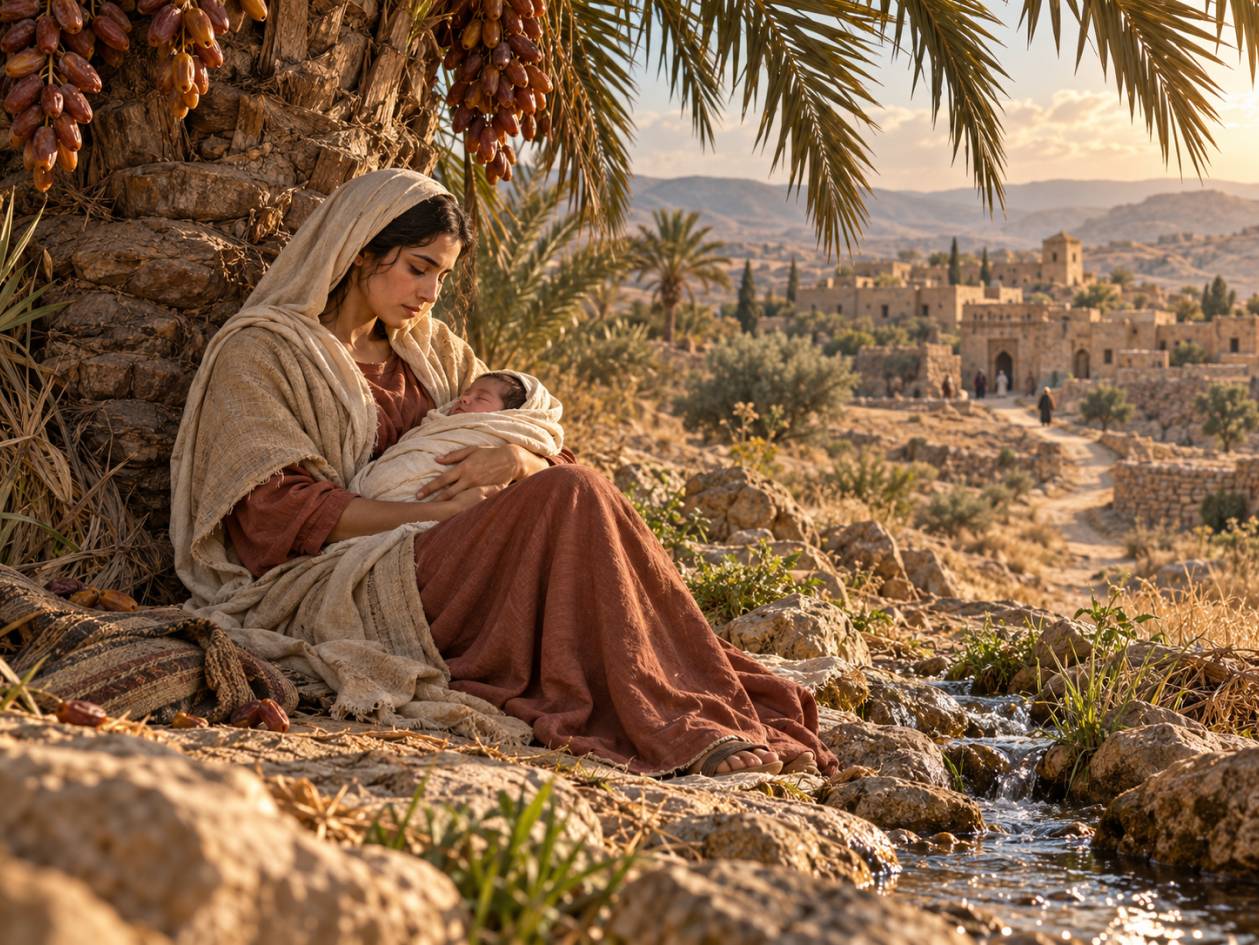
وَلَمْ أَكُ بَغِيًّا The surah then moves on to the pregnancy without describing the conception. I note this sequence, but also the limits of what we can infer from it. Here we find neither Joseph, nor Bethlehem, nor the shepherds. Maryam is alone: labor pains lead her to a palm tree, and her suffering even makes her wish she had died sooner. A voice reassures her; she is shown dates and refreshment. I am struck by the concreteness of the scene, so attentive to the mother’s pain and needs. Maryam must shake the trunk of the palm tree to receive fresh dates. The scene combines divine intervention and human action: nourishment is made available, but Maryam must perform a concrete action. The palm tree and the water recall the Pseudo-Matthew, where they appear during the flight into Egypt. It is a significant parallel that invites comparison without, on its own, implying a direct connection. It is more prudent to speak of a shared narrative heritage. When Maryam returns with the child, her people react with an accusation and address her thus:
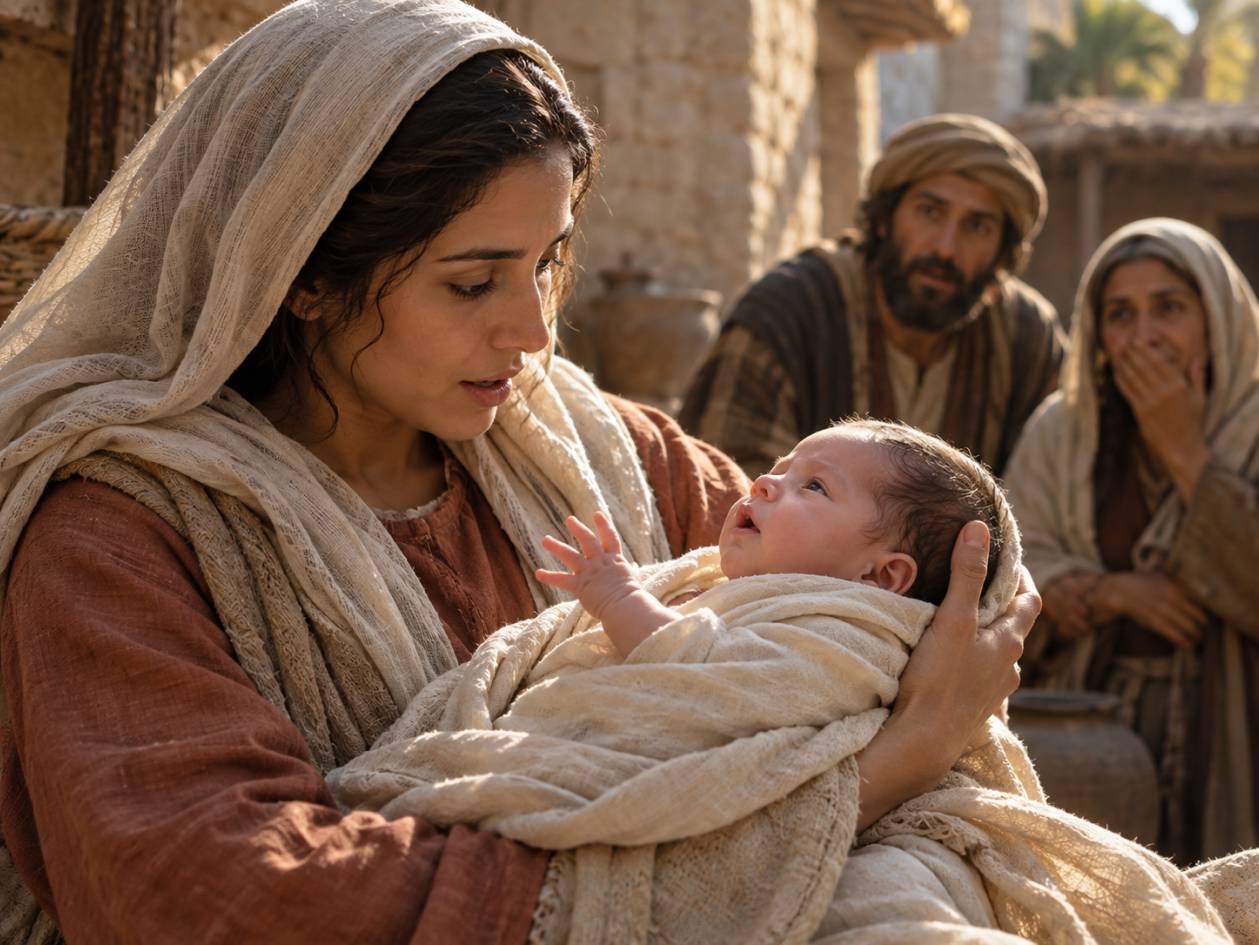
يَا أُخْتَ هَارُونَ The title seems to allude to the biblical Miryam, sister of Aaron. Proposed explanations include a genealogical or symbolic connection, or a reference to a contemporary namesake. The verse does not clarify the actual relationship. Meanwhile, the community contrasts the respectability of Maryam’s parents with her motherhood, which is considered scandalous. Maryam remains silent and points to the child. It is he who speaks:
إِنِّي عَبْدُ اللَّهِ آتَانِيَ الْكِتَابَ وَجَعَلَنِي نَبِيًّا§ ʿĪsā defines himself as a servant and a prophet. The birth without a human father—a detail shared by the Qur’anic narrative and the accounts of Matthew and Luke—does not lead to the same theological conclusion. The surah states, in fact:
مَا كَانَ لِلَّهِ أَنْ يَتَّخِذَ مِنْ وَلَدٍ This is a decisive point: in the Quran, the miraculous birth does not equate to divine sonship. Common elements are found in different visions of the relationship between Jesus and God. Verses 16–36 of Sura Maryam present a narrative in which each character fulfills a specific role. Maryam is a woman alone, physically vulnerable but morally steadfast. She withdraws, fears the intruder, endures labor pains, wishes to die, nourishes herself, and returns to her people carrying the child. She offers no defense: she lets the sign itself speak. The rūḥ is a presence sent by Allah that manifests as a perfectly formed human being. It speaks and identifies itself as a messenger. Its identification with Gabriel belongs to Islamic interpretation; the text refers to it only as rūḥ and rasūl. Allah, repeatedly called ar-Raḥmān, directs the events. The conception is not described in technical terms: it is presented as a decree brought into effect by the word “Be.” The community represents social judgment. It interprets Maryam’s pregnancy as a transgression and invokes the honor of her parents and of Hārūn. Hārūn does not act directly, but his mention links Maryam to the biblical memory of Miriam, Aaron’s sister. The textual connection is evident; its exact historical explanation remains a matter of debate. ʿĪsā speaks from the cradle, implicitly defends his mother, and presents himself as a servant of Allah, a recipient of the Book, and a prophet. He is a sign and a mercy, but he is not the son of Allah. The concluding theological point is clear: the surah acknowledges the virgin birth and attributes exceptional dignity to Maryam, but reinterprets Jesus from a radically non-Christological perspective. The Jesus of Sura 19 does not say “I am God” nor “I am the son of God”; he says first and foremost:
إِنِّي عَبْدُ ٱللَّهِ My advice is always to distinguish the words of the texts from subsequent theological explanations. The chronological distance calls for caution, but a later account retains value for what it documents about the tradition. We can compare these accounts and formulate hypotheses, while acknowledging what remains uncertain. This is where I would like our reasoning to begin, without presuming to have reached the truth.Maryam in Sura 19: Characters, Words, and Biblical Comparisons
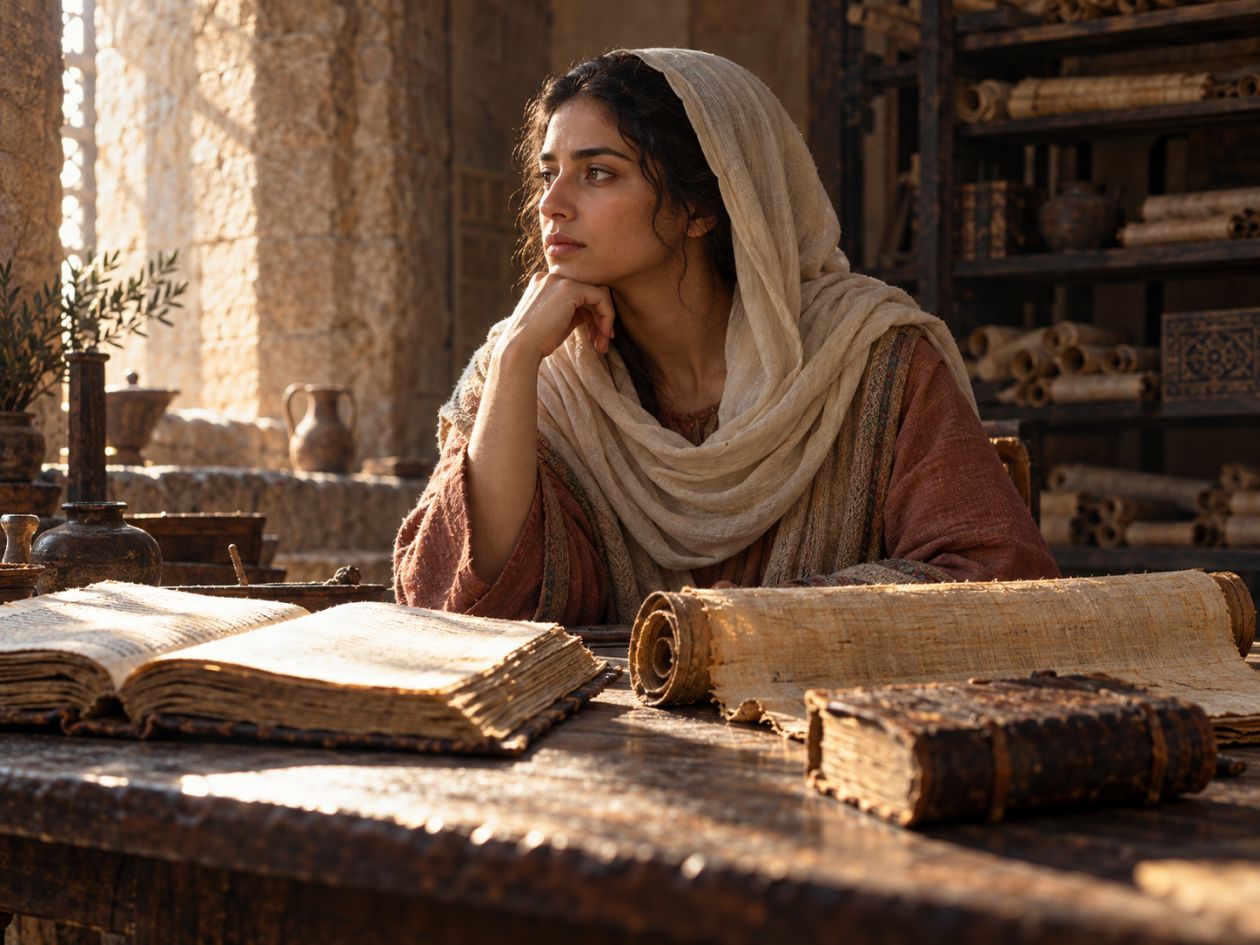
Mary: A Story That Varies Across Sources
The rūḥ: what the Arabic text says
“Then We sent Our rūḥ to her, and it appeared to her as a well-formed human being” (Quran 19:17, excerpt).
bašaran sawiyyā
“he took on a form, he manifested himself by assuming a form.”
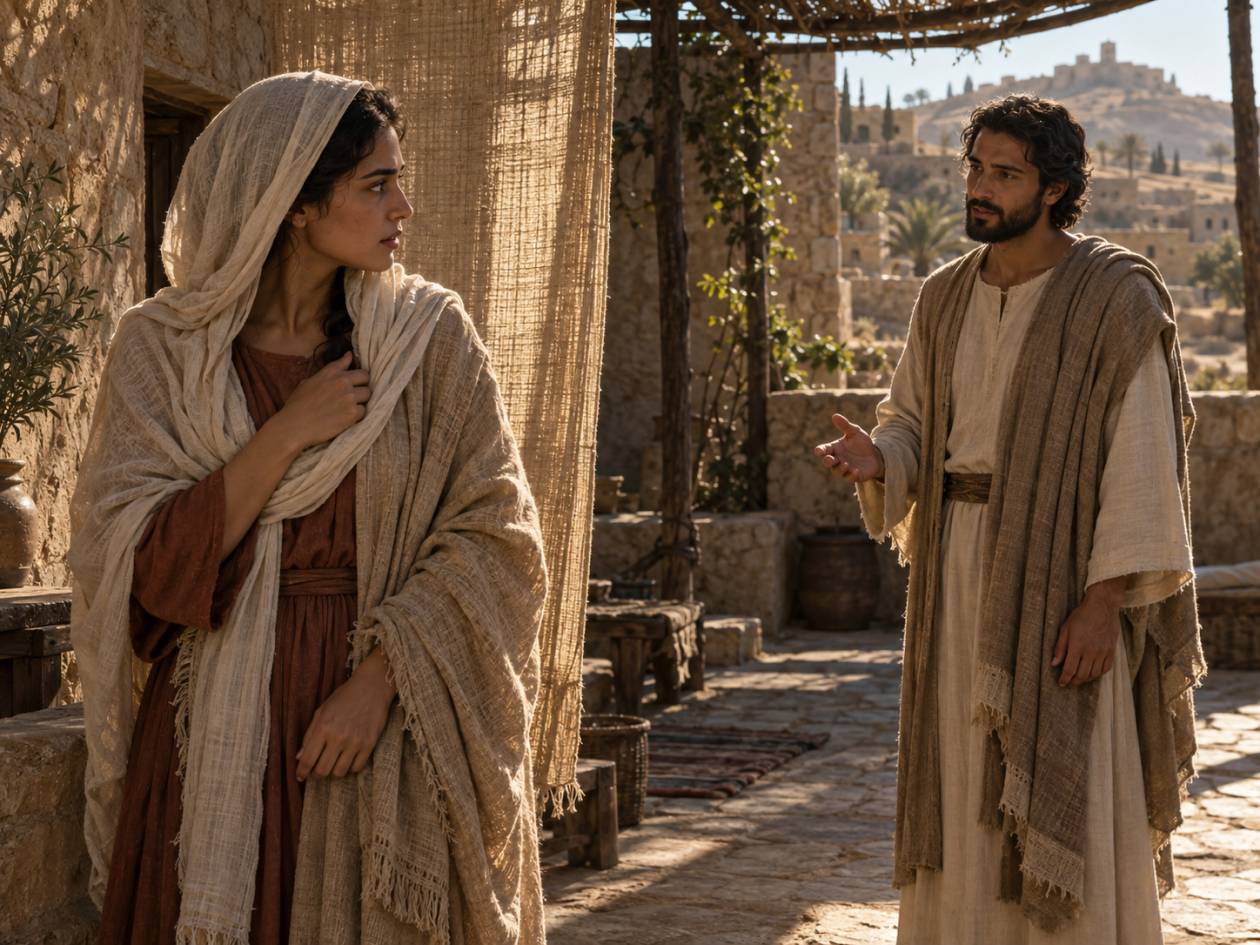
The Messenger and the Announcement of the Son
“the messenger of your Lord.”
“I am only a messenger from your Lord, so that I may bestow upon you a pure son” (Qur’an 19:19, excerpt).
Allah and the Plural Form of the Divine Voice
“we sent”
“our rūḥ.”
“this is easy for me.”
“while no human being has touched me.”
wa-lam aku baġiyyā
“and I have not been a prostitute.”
The Birth by the Palm Tree and the Return Among the People
“O sister of Hārūn” (Quran 19:28, excerpt).
ʿĪsā: An Extraordinary Birth, a Different Meaning
“Truly, I am a servant of Allah. He has given me the Book and made me a prophet” (Quran 19:30, excerpt).
“It is not befitting for Allah to take a son” (Quran 19:35, excerpt).
Reading Without Filling in the Gaps
innī ʿabdu llāhi
“Truly, I am a servant of Allah.”